

-
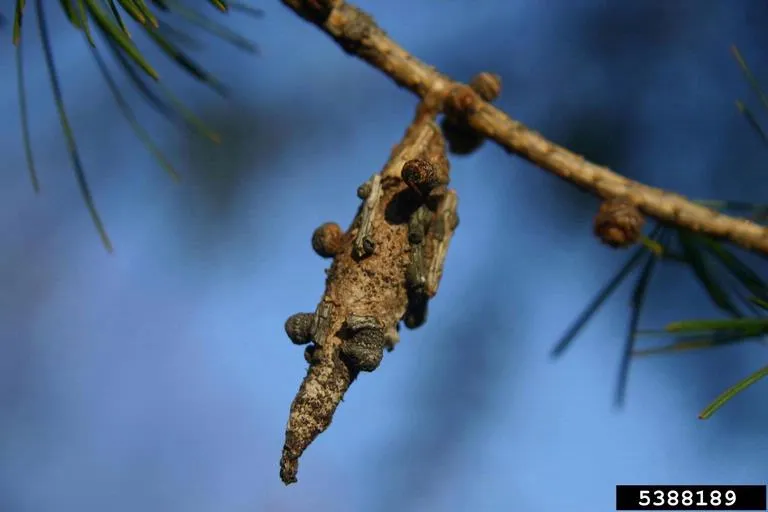
Bagworms
Bagworm is a caterpillar that molts into a moth in the adult stage. They are easiest to identify by the bags they construct as they feed. Damage includes needle discoloration and injury.
-
Bark Beetle
Bark beetles, family Scolytidae, are common pests of conifers (such as pines, Arborvitae, Fir, Juniper, Leyland Cypress) and some attack broadleaf trees. Over 600 species occurring the United States and Canada with approximately 200 in California alone. The most common species infesting pines in urban landscapes
-
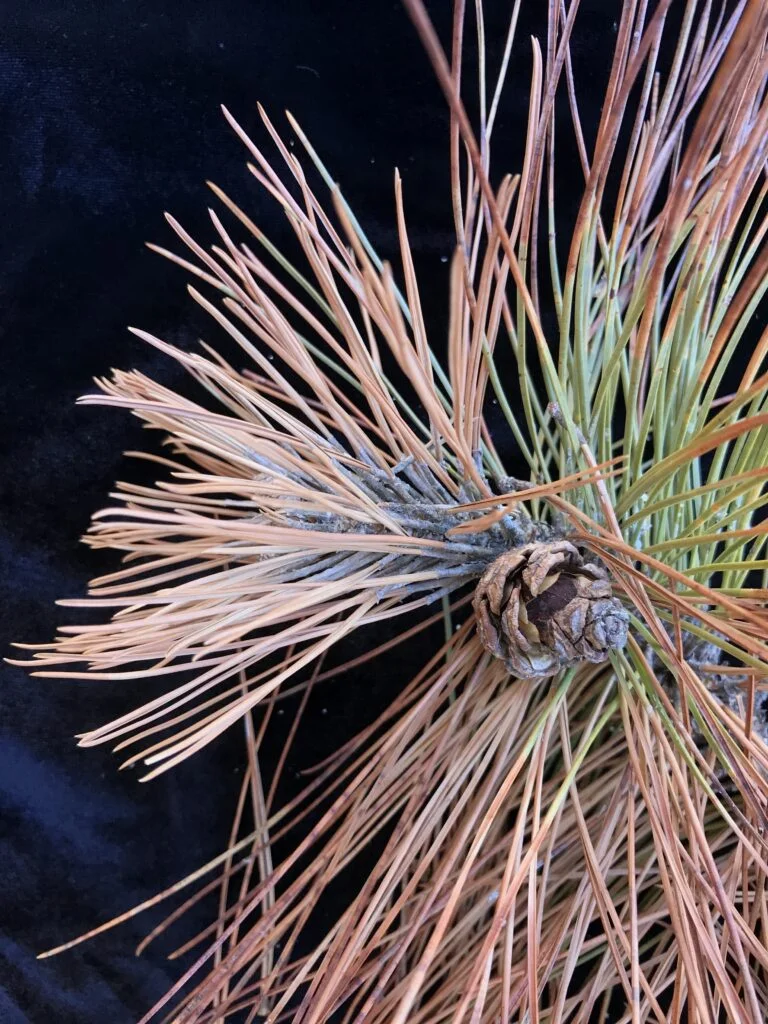
Diplodia (Sphaeropsis) Tip Blight on Pine
Austrian, Scots, ponderosa, mugo, red and other 2 and 3-needled pines are susceptible to the killing of shoot tips and branches by the fungus Diplodia pinea (formerly Sphaeropsis sapinea).
-
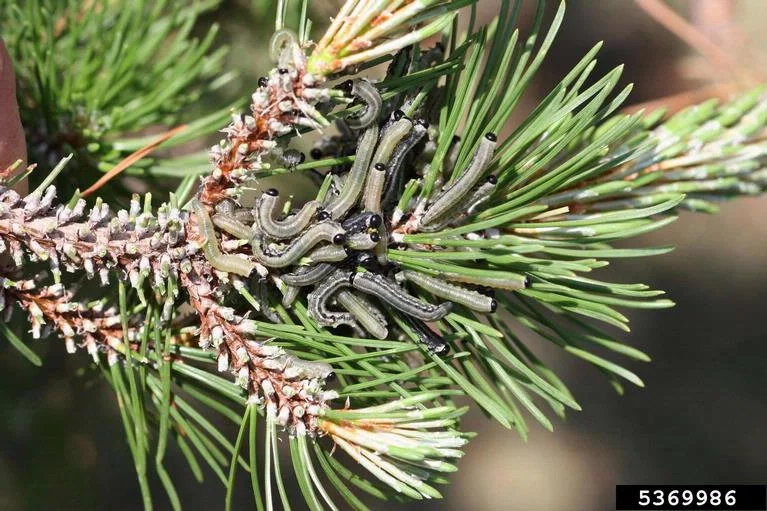
European Pine Sawfly
The most common sawfly species that attacks pines in Pennsylvania is the European pine sawfly.
-
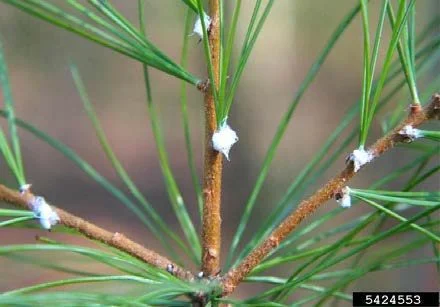
Pine Bark Adelgid
A tree heavily infested with pine bark adelgid may have the look of snow on its branches and trunk.
-
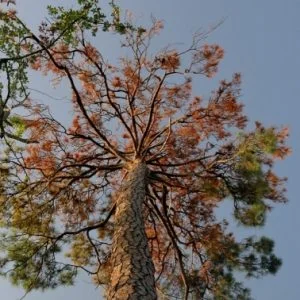
Pine Bark Beetle
These cylindrical, brown to black beetles are usually very small, 1/6 to 1/8-inch, but they can cause considerable damage. Fortunately,…
-
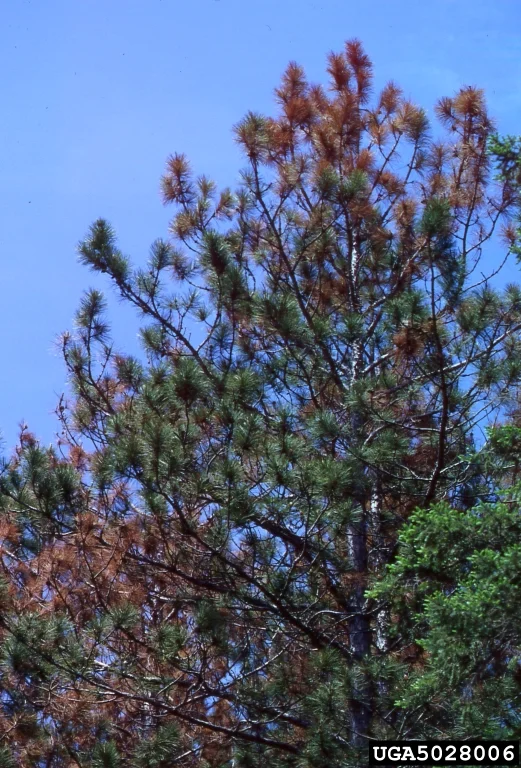
Pine Diplodia Tip Blight
Austrian, Scots, ponderosa, mugho, red and other 2 and 3-needled pines are susceptible to the killing of shoot tips and…
-
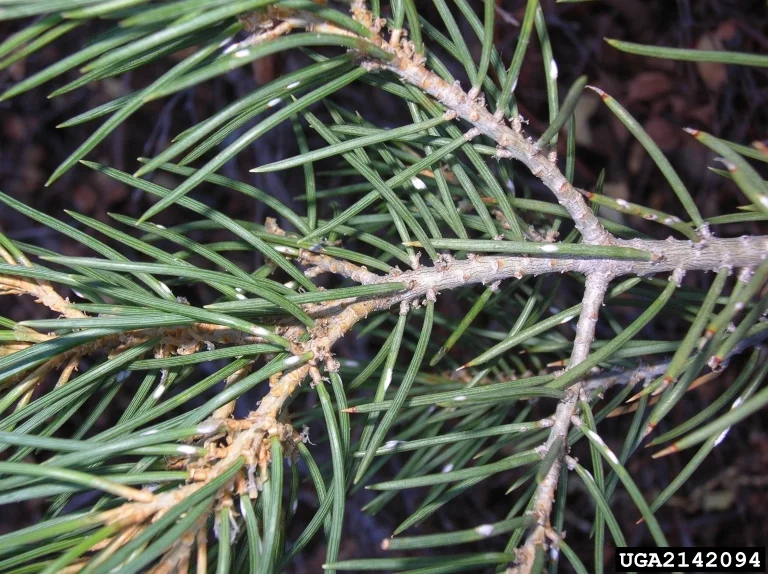
Pine Needle Scale
The pine needle scale is considered a key pest of pines in landscapes, nurseries, and Christmas tree plantations in Pennsylvania.
-
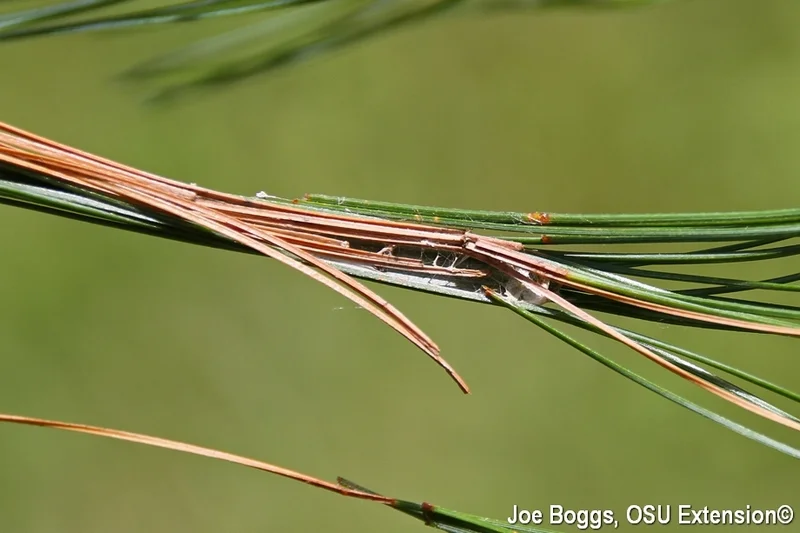
Pine Tube Moth
Individual Pine Tube Moth (Argyrotaenia pinatubana) caterpillars use silk to form a hollow tube by binding together 10 – 20 needles. They then move up and down their silk-lined tube to feed on the tips of the bound needles.
-
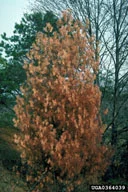
Procera Root Rot
Procera root rot also known as white pine root decline is caused by a fungus. It infects the inner bark and sapwood of the roots and lower trunk of white pine.
-
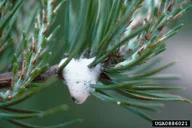
Spittlebug
This pest is most commonly recognized when the nymphs make the bubbly spittle masses on small branches of conifers.
-
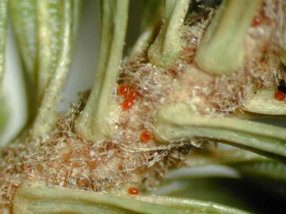
Spruce Spider Mite
The Spruce Spider Mite is considered one of the most destructive spider mites in the United States.
-
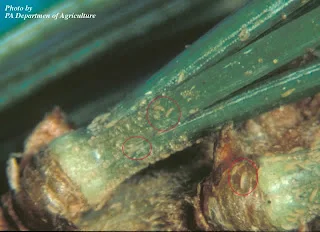
White Pine Sheath Mite
Eriophyid mites are distinctly different from the typical spider mite. They are extremely small and only have two pairs of legs in all active stages. The body is wedge or carrot shaped and light tan or pinkish
-
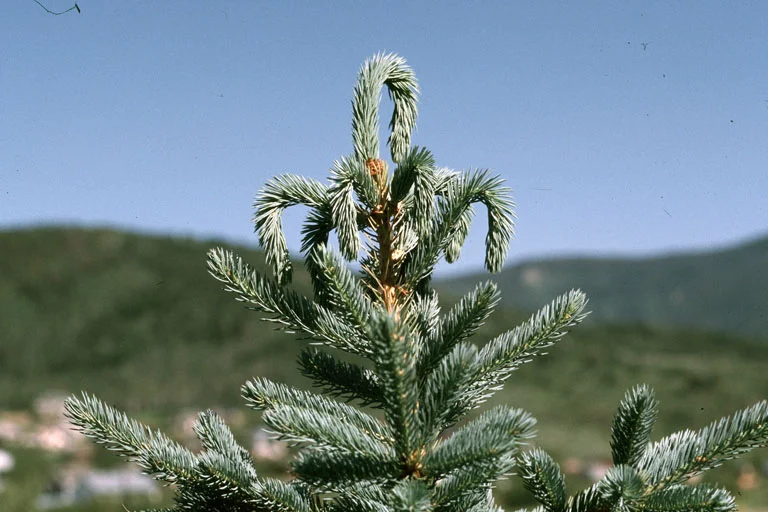
White Pine Weevil
The white pine weevil is considered the most destructive insect pest of eastern white pine in North America.