Beech Leaf Disease
Affected Species:
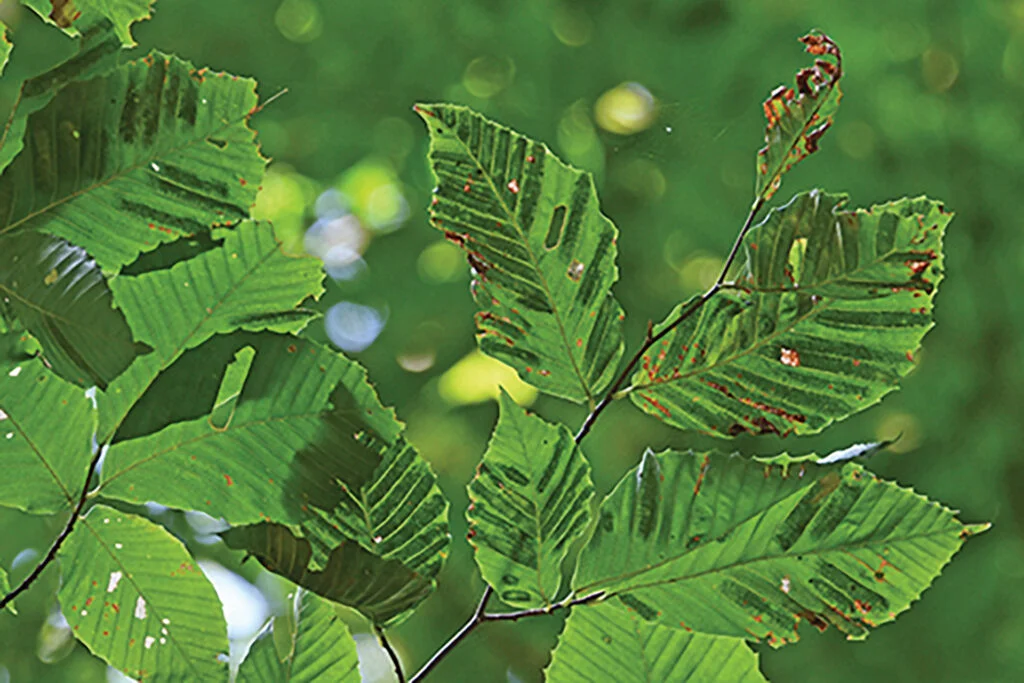
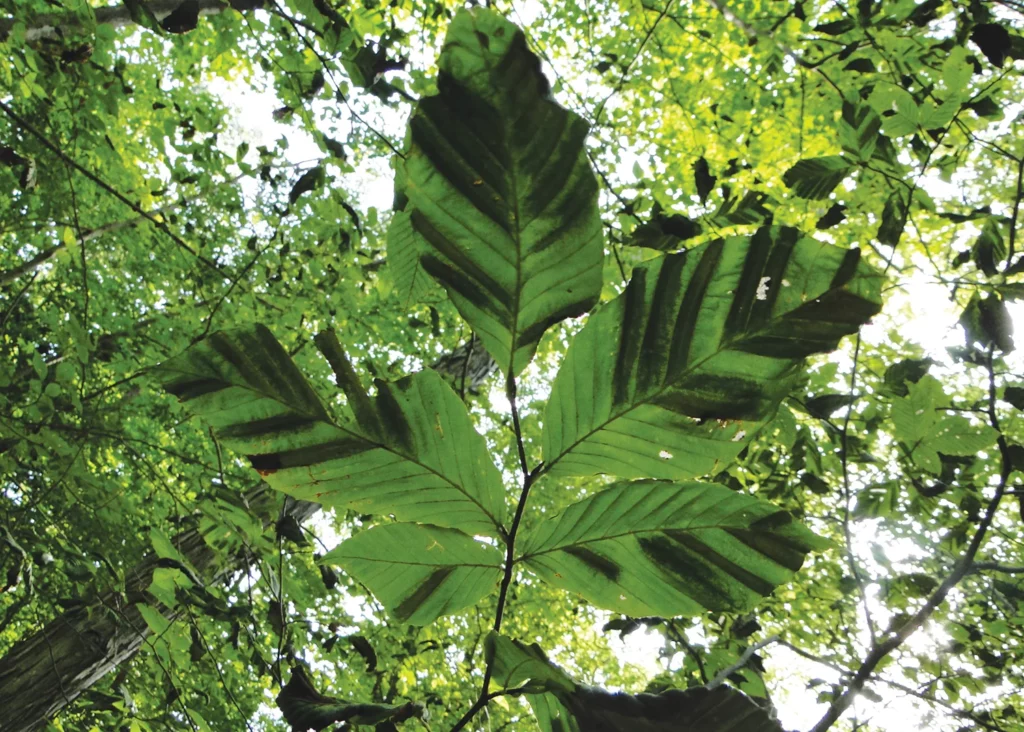
Beech leaf disease (BLD) is caused by an invasive nematode Litylenchus crenatae subsp. mccannii. Nematodes are microscopic roundworms. Most nematodes are free-living, but some are parasites of animals and plants. Most plant parasitic nematodes live in soil moisture films and feed on plant roots. The nematode that causes BLD is unique in that it is found in the foliage of a tree rather than in the roots.
BLD is in our AREA
Sadly, a serious disease has entered the area that threatens all beech trees. Beech Leaf Disease was discovered in Ohio in 2012 and has moved steadily East to our neighbors in New England, Connecticut, Maine and New York, and finally has made it to our service area. Beech Leaf Disease is caused by a leaf and bud-dwelling nematode. The nematode damages leaf and bud tissue causing leaf distortion, bud damage, twig and branch death and eventually death of the host tree. Tree death can occur in 5-10 years.
BLD Treatment Protocol
Researchers and Arborists have been working to try to understand the disease and establish effective treatments for Beech Leaf Disease. So far, we have 3 different tools to help protect beech trees.
Phosphite Application
First is a Phosphite treatment, which is something we have successfully used for 20 years to help European beech trees deal with another devastating disease called Phytophthora. Phosphites seem to enhance trees’ ability to fend off certain pathogens and become more stress tolerant. This doesn’t seem to be a ‘cure’ for Beech Leaf Disease, but it showed some promise in an early study conducted in Ohio.
Broadform Foliar Spray
Second is a foliar spray with a product containing the nematicide called Fluopyram. This appears to be very effective, but will be limited to trees that can be canopy-sprayed. For example, 100-foot-tall beech trees would not be good candidates for spraying.
Root Flare Injection
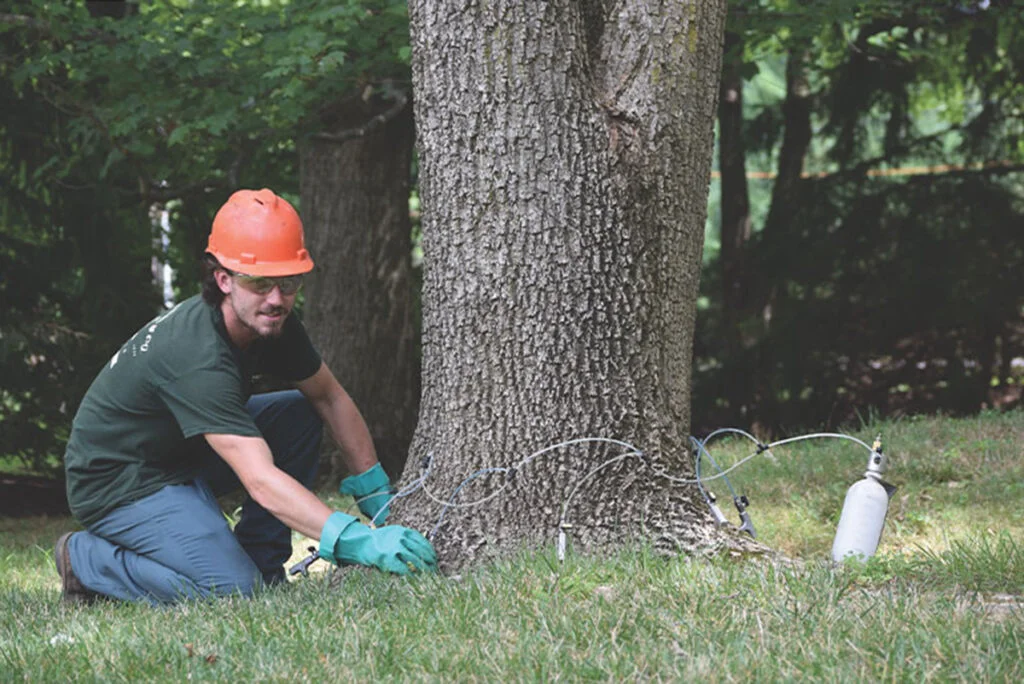
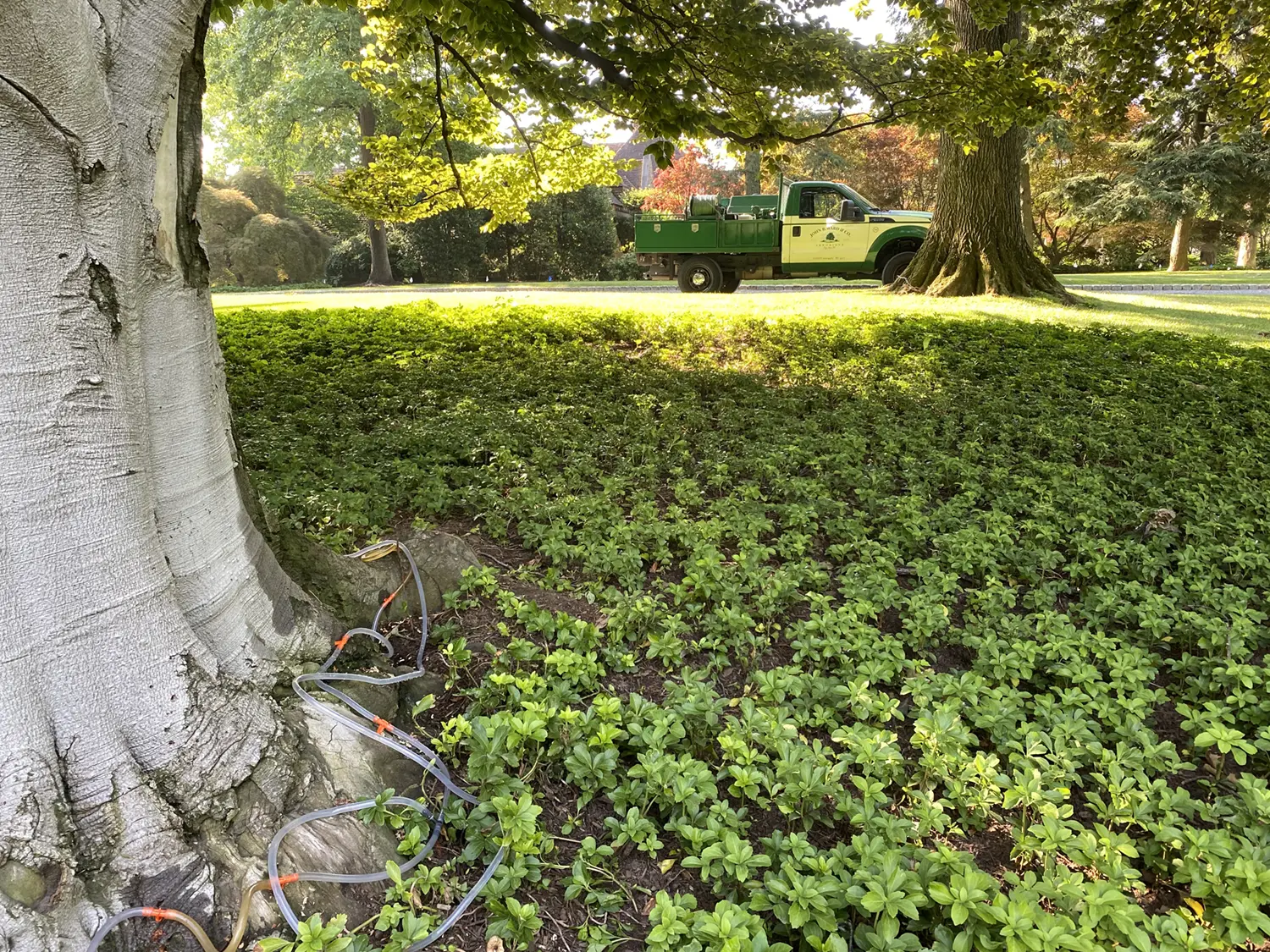
Third is a root flare injection of a product called Arbotect. This is the same product that we use to protect against Dutch Elm Disease in American elms. Arbotect has the ability to move to all parts of the tree canopy and kill the nematode. It seems to provide two years of protection for beech trees. The downside of Arbotect injection is the application’s price. It might be a perfect solution for a property with a handful of beech trees, but will be prohibitively expensive and impractical to treat a woodland with Arbotect.
Beech trees benefit from the same proper arboricultural practices that benefit any tree; more so if they are combatting a major threat such as BLD. Proper watering, mulch and fertilization are critical to overall tree health and will be emphasized to go along with BLD treatment protocols.
We recommend that any of our clients with beech tree should contact us so that we can have a conversation about how we can utilize the tool or tools that make the most sense to save your amazing beech trees.