

Disease Archives
Browse disease resources.
-
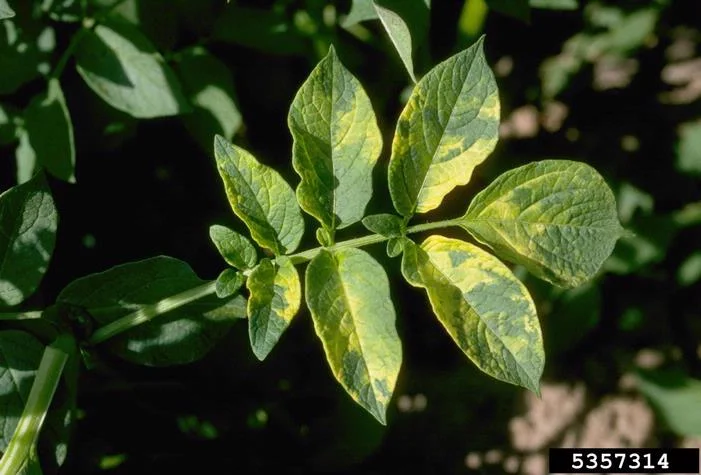
Alfalfa Mosaic Virus
Alfalfa mosaic virus has a broad host range that includes over 600 plant species in 70 families
-
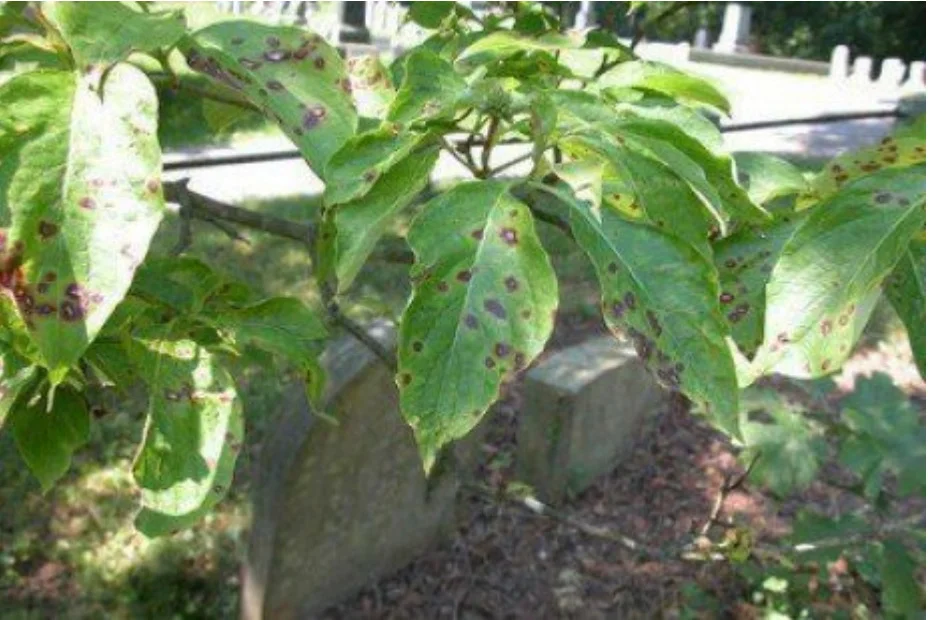
Anthracnose
Many deciduous hardwoods are susceptible to a leaf disease called anthracnose that is caused by various species of the fungus Anthracnose.
-
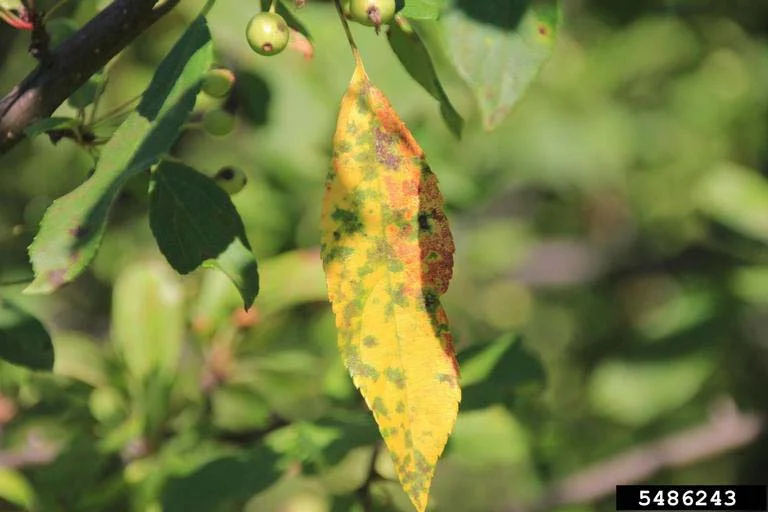
Apple Scab
Apple scab is Pennsylvania's most important apple disease, attacking wild and cultivated apple and crabapple.
-
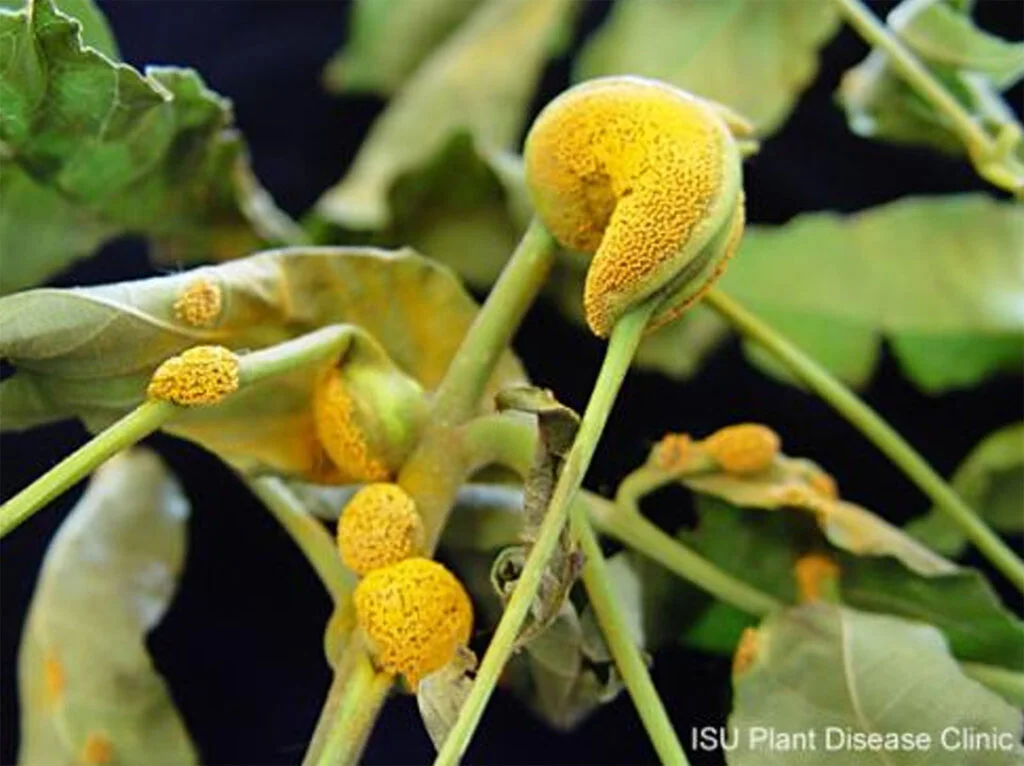
Ash Rust
Ash rust is a common fungal disease of all species of ash trees. The disease is rarely destructive enough to warrant special control measures.
-
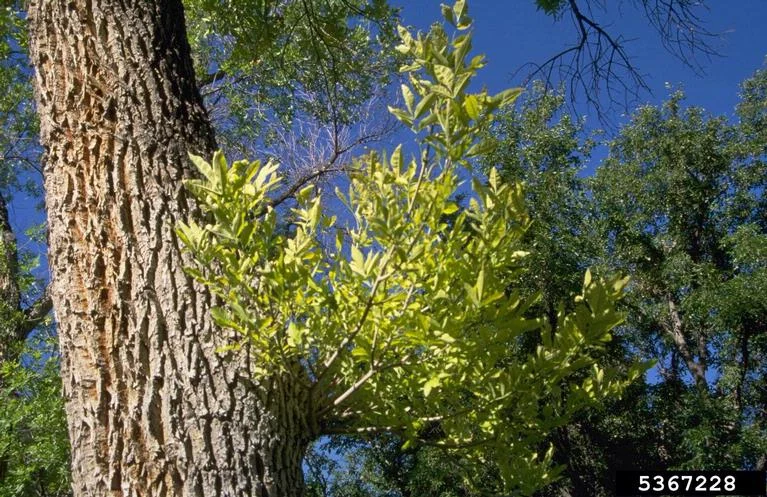
Ash Yellows
Ash yellows is a disease caused by Candidatus fraxinii , which affects the tree's vascular system or its’ phloem sieve tubes. It is presently only found in North America. Ash yellows disease cycle is still a mystery. Experts think it is transmitted by insect vectors such as leaf hoppers which also transmit viruses.
-
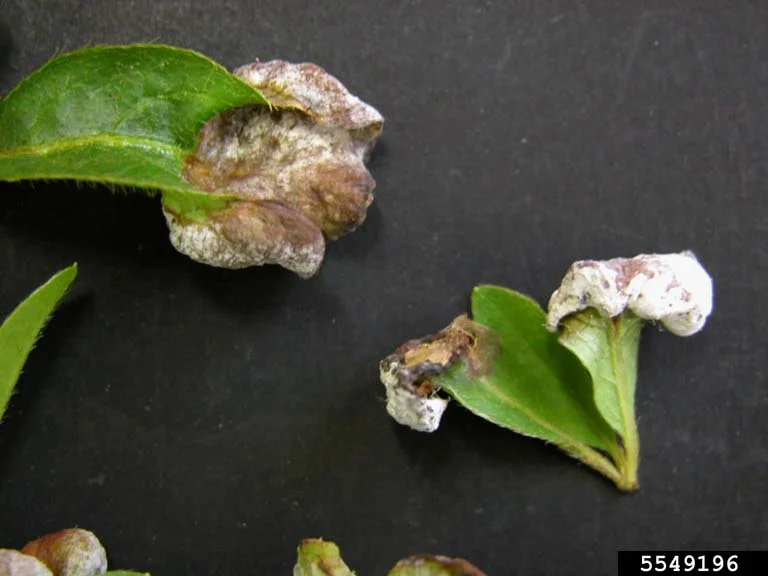
Azalea and Rhododoendron Diseases
Informational table showing disease name, symptoms, pathogen/cause, and management of Azalea and Rhododendron diseases.
-
Bacterial Blight
Bacterial blight of lilac, also known as shoot or blossom blight, is caused by the bacterium Pseudomonas syringae pv. syringae. The pathogen is capable of causing damage to all types of lilacs including Japanese, Chinese, Persian and common varieties. Some researchers suggest that white flowering varieties may be more susceptible to infection than other varieties. The disease is usually associated with plants that have been stressed by drought conditions, improper fertilization, and/or have been wounded. The pathogen has also been reported on Forsythia, Blueberry, and other ornamental plants.
-
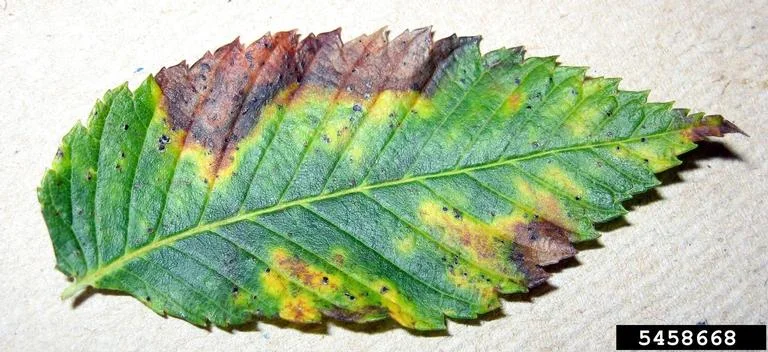
Bacterial Leaf Scorch
Leaf scorch, sometimes called marginal leaf burn, describes the death of tissue along the edge of the leaf. This symptom develops when sufficient water does not reach the leaf margin cells. This can occur if 1) there is insufficient moisture in the soil 2) water is lost too quickly from the leaves to be replaced adequately, 3)roots have been killed by plant pathogens, excavation, or compaction or 4) fungi or bacteria invade and plug the water conducting vessels (xylem) in the plant.
-
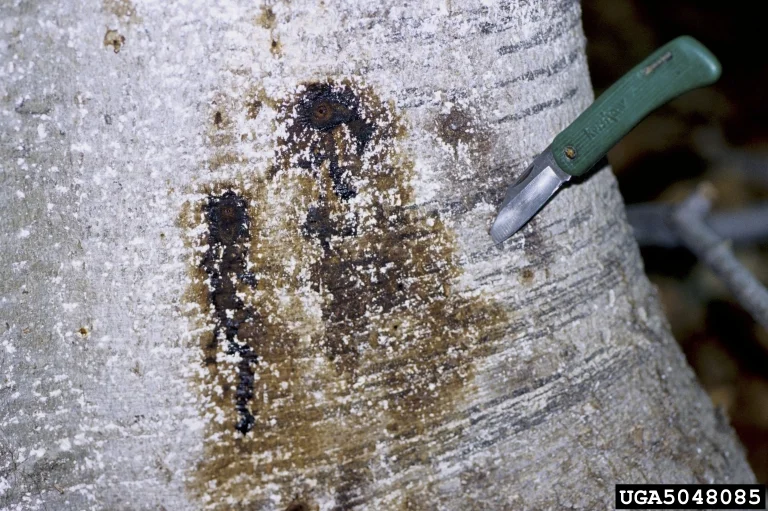
Beech Bark Disease
Beech bark disease causes significant mortality and defect in American beech, Fagus grandifolia (Ehrh.).
-
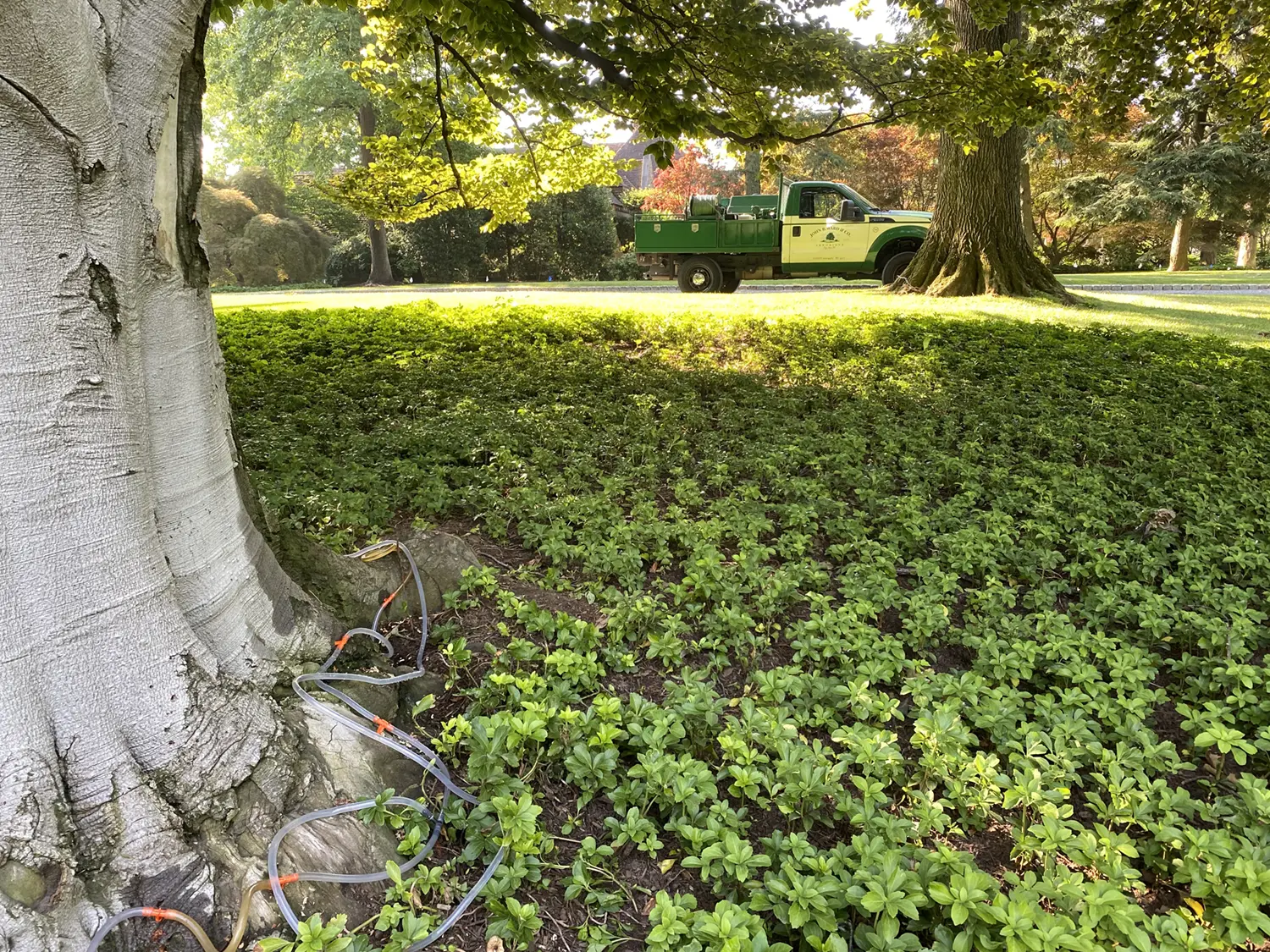
Beech Leaf Disease
Beech leaf disease (BLD) is caused by an invasive nematode Litylenchus crenatae subsp. mccannii. Nematodes are microscopic roundworms. Most nematodes are free-living, but some are parasites of animals and plants. Most plant parasitic nematodes live in soil moisture films and feed on plant roots. The nematode that causes BLD is unique in that it is found in the foliage of a tree rather than in the roots.
-
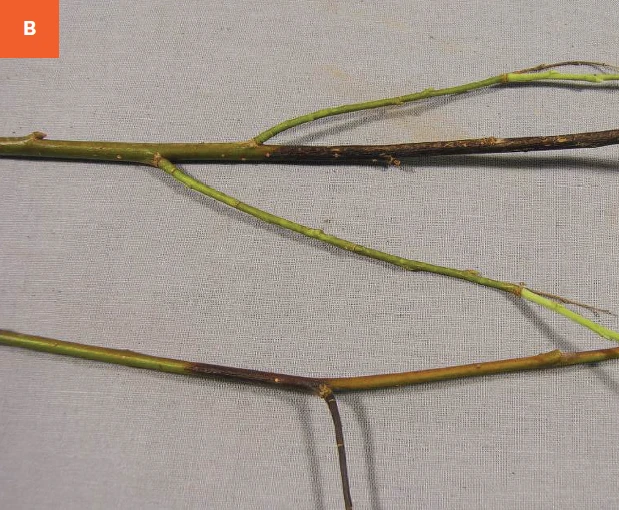
Black Canker
Black canker of willow (Salix spp.) is caused by the fungus Glomerella miyabeana (Glomerellaceae). In North America and Europe, the black canker pathogen is consistently associated with the willow scab fungus (Venturiaceae: Venturia saliciperda) and together they combine to produce a serious disease of willow known as “willow blight”.
-
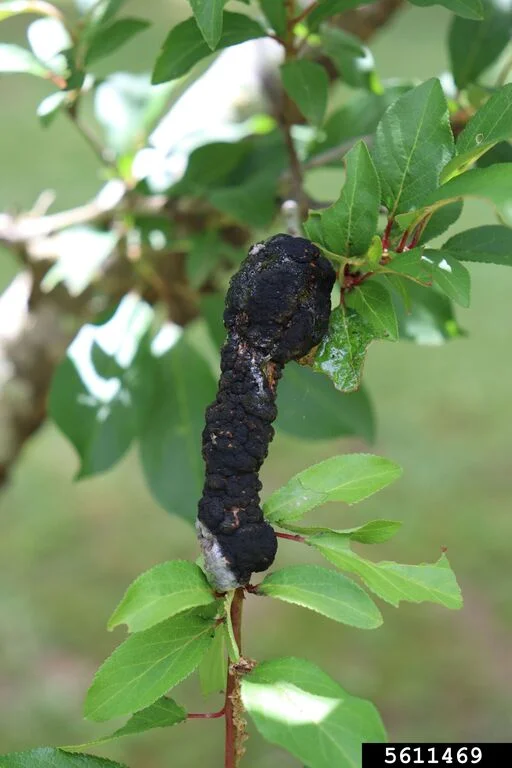
Black Knot
Black knot is a common fungal disease of Prunus trees including ornamental, edible, and native plum and cherry trees. Hard swollen black galls (tumor like growths) form on branches and occasionally on trunks. Many Prunus trees tolerate black knot. Tolerant trees have many galls throughout the tree with few negative effects on the health of the tree. Some Prunus trees are more severely affected by black knot. In these trees, leaves and shoots wilt and die on branches with galls. Management will vary depending on how severely the tree is affected by black knot.
-
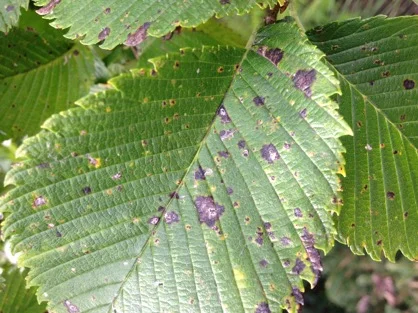
Black Leaf Spot
Leaf spot is a common descriptive term applied to a number of diseases affecting the foliage of ornamentals and shade trees. The majority of leaf spots are caused by fungi, but some are caused by bacteria. Some insects also cause damage that appears like a leaf spot disease. Leaf spots on trees are very common and generally do not require spraying. Leafspot may result in some defoliation of a plant. An established plant can tolerate almost complete defoliation if it happens late in the season or not every year. Small or newly planted trees that become defoliated are more at risk of suffering damage until they become established.
-
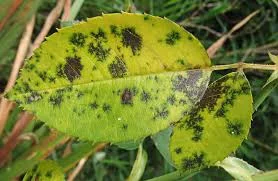
Black Spot
A common disease of roses called black spot is caused by the fungus Diplocarpon rosae. This fungus readily attacks young expanding leaves and young canes. Fungal spores which were formed on infected fallen leaves or on canes are splashed to the new lower leaves of roses in the spring by rain or sprinkler irrigation. The spores must remain wet for several hours in order for the spore to germinate and invade the leaf. If temperatures are warm following infection, symptoms may become visible in 3 days. New spores can form in as few as 10 days after infection. Thus under some conditions the fungus can infect a plant, begin producing new spores, and spread to other leaves within two weeks.
-
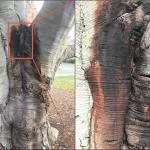
Bleeding Canker
Phytophthora bleeding canker kills the bark and outer sapwood tissues of trees and shrubs. The most prominent symptom of the disease is dark-colored sap oozing from bark cankers. The fluid is typically reddish-brown and it stains the surrounding bark as it flows downward. Infected bark is often water soaked and stained while the inner sapwood can exhibit a range of abnormal colors (brown, bluish-green, orange and pink) depending on the particular species of Phytophthora present.
-
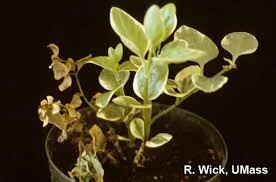
Blight
Stem Blight of Catharanthus rosea (V. rosea, Vinca minor (Periwinkle) and Vinca major (big-leaf or variegated) is caused by the fungus Phoma exigua. Symptoms consist of rapidly expanding, dark brown to black, girdling lesions on stems at the soil line which result in dieback. Stem lesions expand rapidly, spread to the base of new shoots, and cause wilting, browning, and plant death. The pathogen is widespread and the disease is potentially destructive wherever these plants are grown. Stem blight may be so severe that plantings cannot be maintained and must be replaced. Newly planted beds are most susceptible.
-
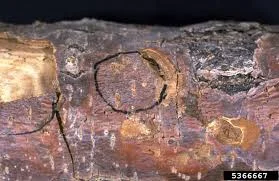
Botryodiplodia Canker
Pathogen—Botryodiplodia canker is caused by fungal species in the genus Botryodiplodia, including B. hypodermia and B. theobromae. Botryodiplodia is the asexual form of the fungus. The sexual states for some of the Botryodiplodia species are Botryosphaeria spp.
-
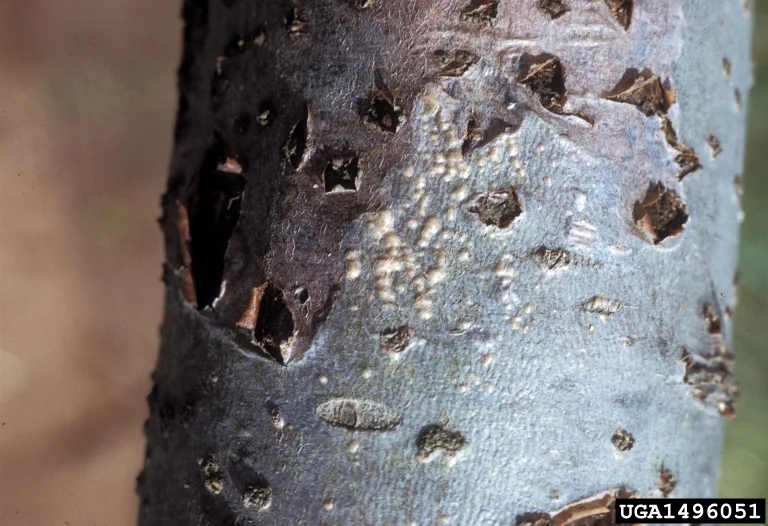
Botryosphaeria Canker
The fungus Botryosphaeria can cause a branch dieback on many woody ornamentals. Cankers girdle and kill twigs and branches of species such as horsechestnut, redbud, dogwood, beech, walnut, tulip poplar, sweetgum, crabapple, pine, oak, rhododendron, azalea, rose, willow, elm, and yew. Small black fungal fruiting structures which contain fungal spores develop in the canker.
-
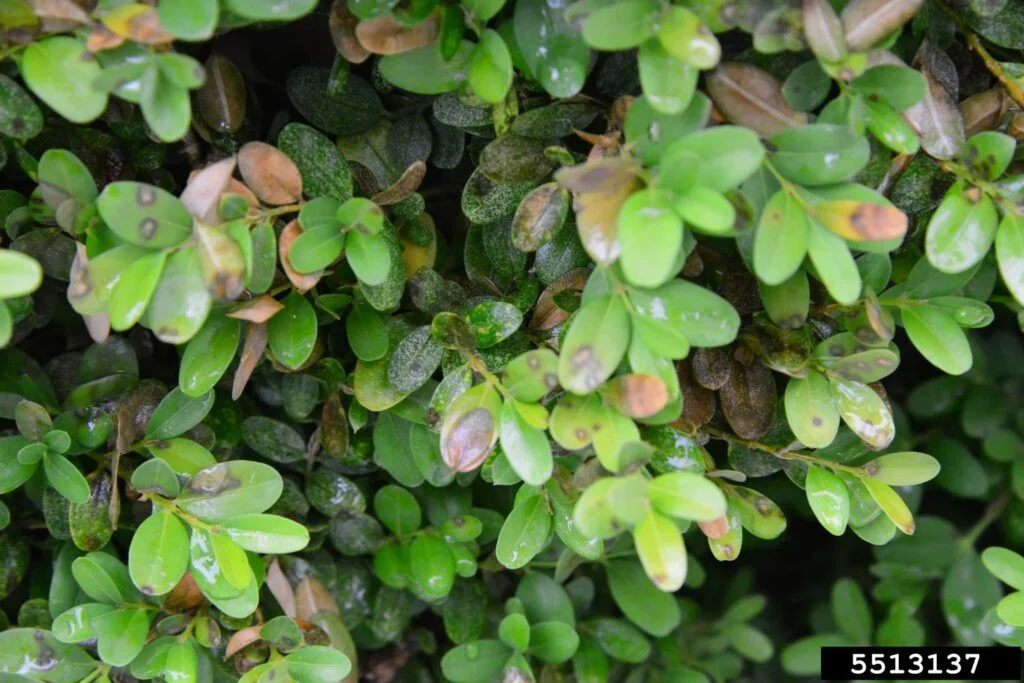
Boxwood Blight
Cylindrocladium pseudonaviculatum infects all aboveground portions of boxwood, but does not appear to infect the roots. Initial symptoms appear as dark or light brown spots or lesions on the leaves. These lesions often have dark borders. Spots enlarge and then coalesce, often with a concentric pattern or a zonate appearance. Infected leaves then turn brown or straw colored, so infected plants look “blighted”. Defoliation often occurs very quickly after foliar symptoms first develop.
-
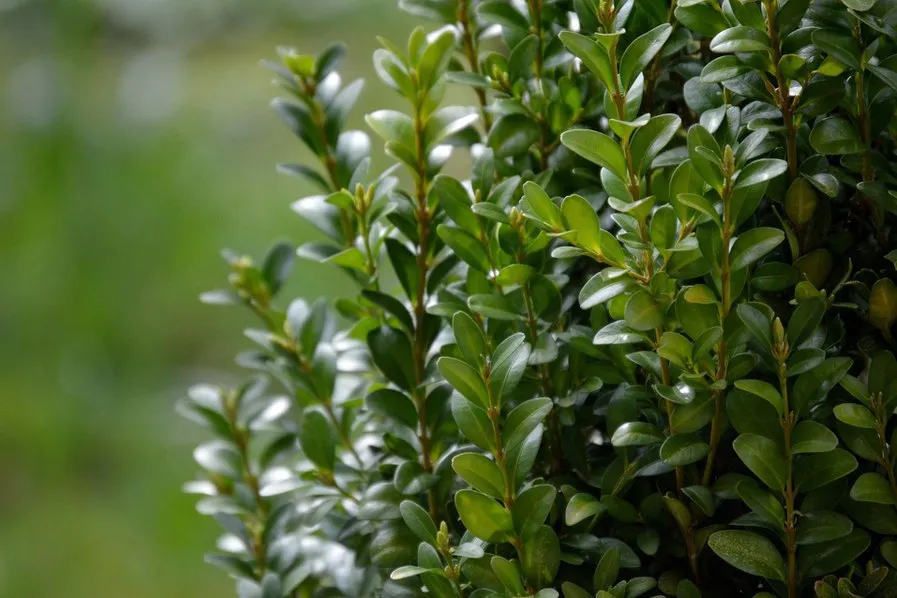
Boxwood Diseases
-
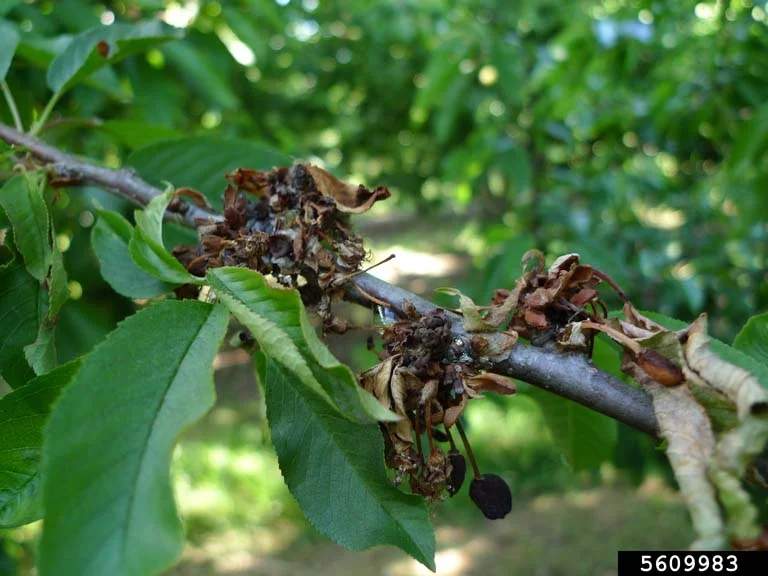
Brown Rot
On ornamental cherries, the first symptoms often seen are browing and collapse of the blossoms followed closely by death of the small twigs.
-
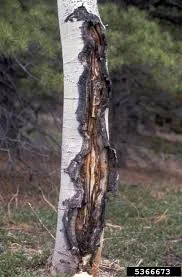
Canker Stain
London plane and sycamore trees are susceptible to a fungus, Ceratocystis fimbriata f. sp. platani, that is lethal.
-
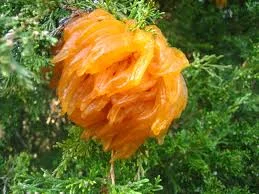
Cedar Apple & Cedar Hawthorn Rust
Cedar-apple rust and closely related diseases, cedar-quince, cedar, hawthorn, and Japanese apple rusts are caused by fungi of the genus Gymnosporangium.
-
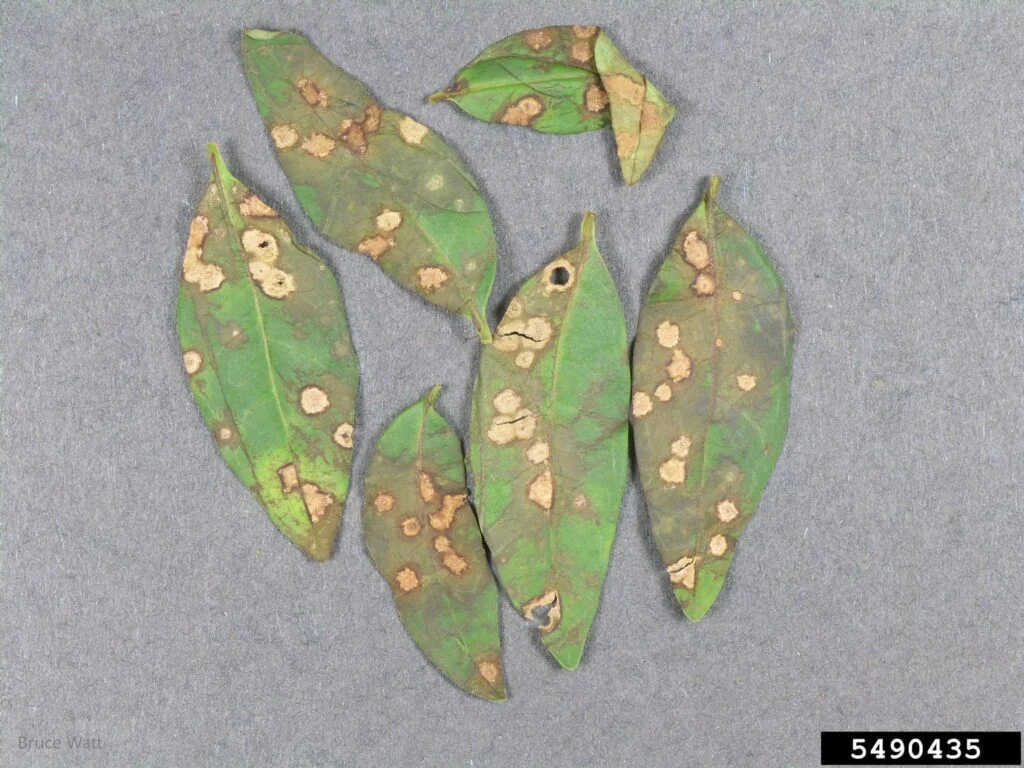
Cercospora
Cercospora leaf spot is a fungal disease that causes brown or tan spots on privet leaves. The spots can be irregular or circular, and may have reddish-purple borders.
-
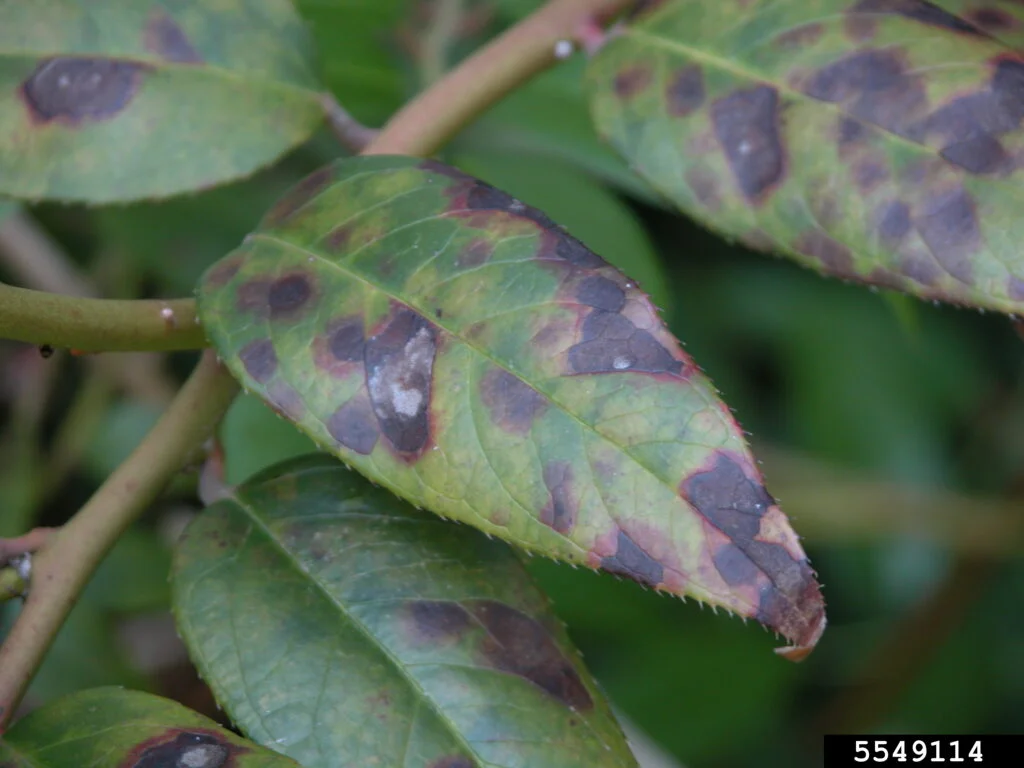
Cercospora Leaf Spot
Cercospora leaf spot is a common disease that affects the leaves of leucothoe plants. It's usually not serious, but can be disfiguring in cool, rainy springs.
-
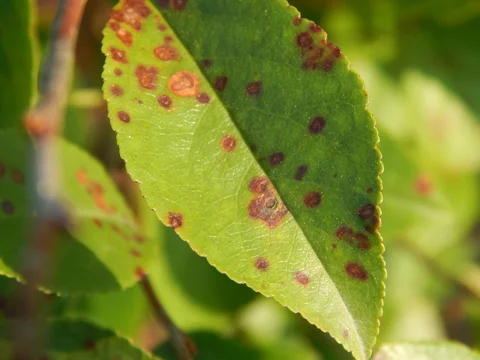
Cherry Leaf Spot
Cherry leaf spot (Blumeriella jaapii) is a fungal disease which infects cherries and plums. Sweet, sour, and ornamental cherries are susceptible to the disease, being most prevalent in sour cherries. The variety of sour cherries that is the most susceptible are the English morello cherries. This is considered a serious disease in the Midwest, New England states, and Canada.
-
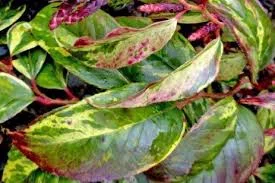
Cylindrocladium
Dark spots form on leaves. Lesions on stems can girdle and kill them. Plants are stunted. Leaves yellow and wilt as branches die. Many dark-brown to black lesions form on roots, enlarge, and girdle roots. Longitudinal cracks may
-
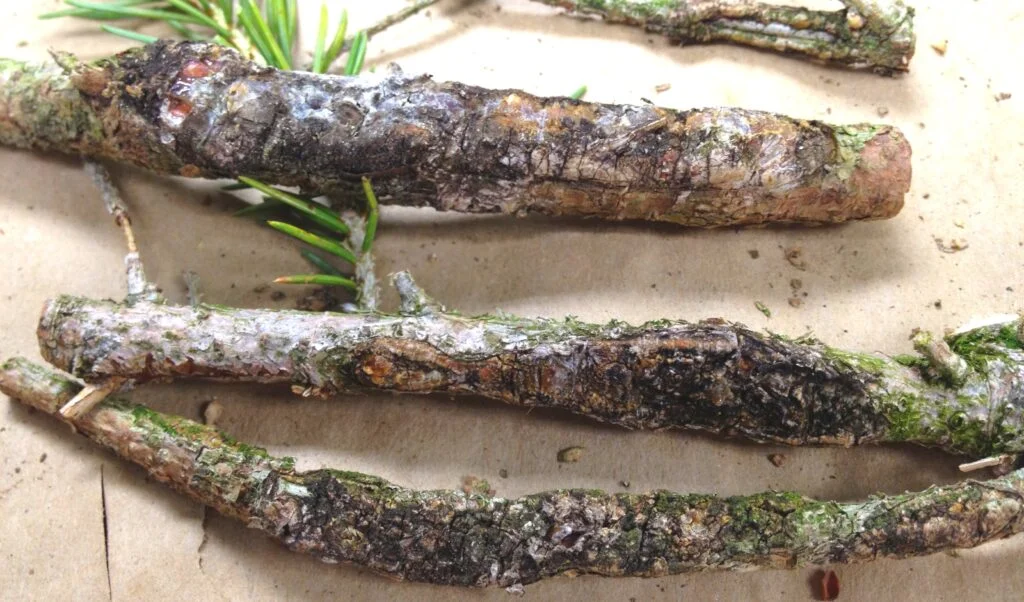
Cytospora Canker
-
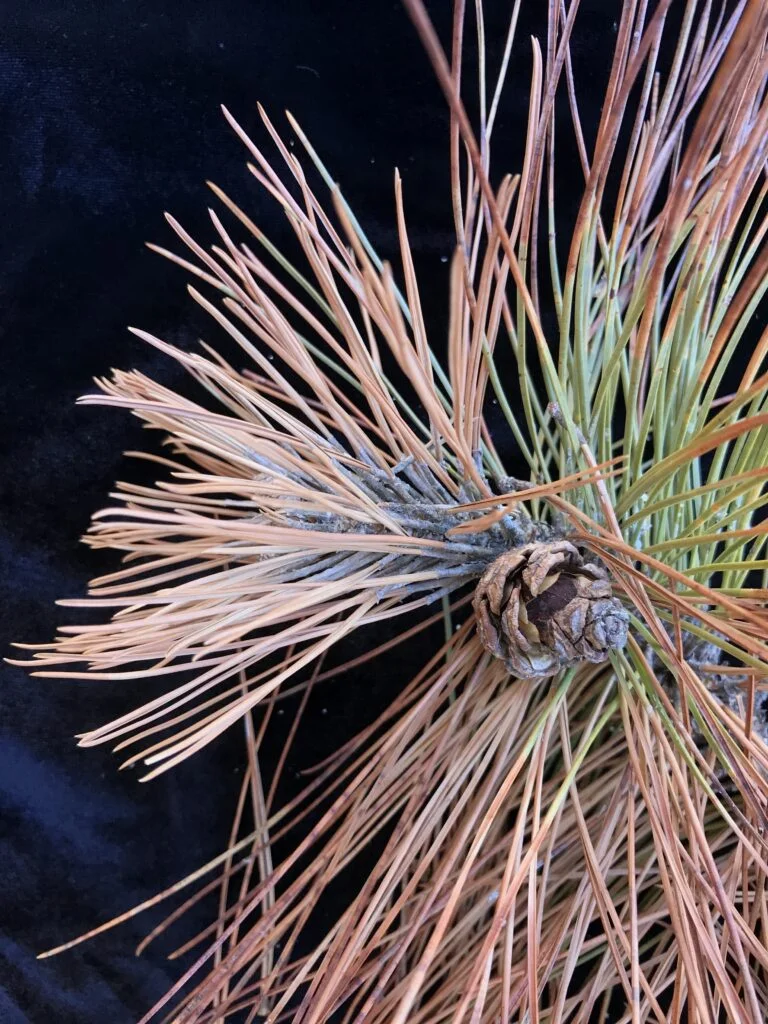
Diplodia (Sphaeropsis) Tip Blight on Pine
Austrian, Scots, ponderosa, mugo, red and other 2 and 3-needled pines are susceptible to the killing of shoot tips and branches by the fungus Diplodia pinea (formerly Sphaeropsis sapinea).
-
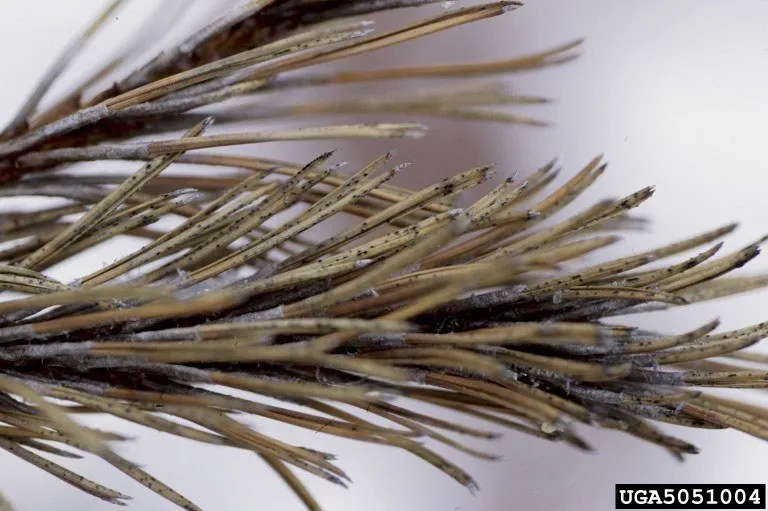
Diplodia Tip Blight
Diplodia (formerly Sphaeropsis) tip blight is caused by the fungus Diplodia pinea. It is the most common and severe disease of pines in Pennsylvania and attacks trees of all ages. Tips of infected current-year shoots will blight. Needles on these dead tips are usually tan to straw colored, shorter than normal, and typically remain attached.
-
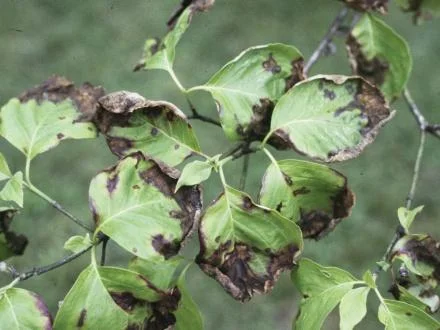
Dogwood Anthracnose (Discula)
The early symptoms of discula anthracnose begin in mid to late May as leaf spots with tan or purple borders.
-
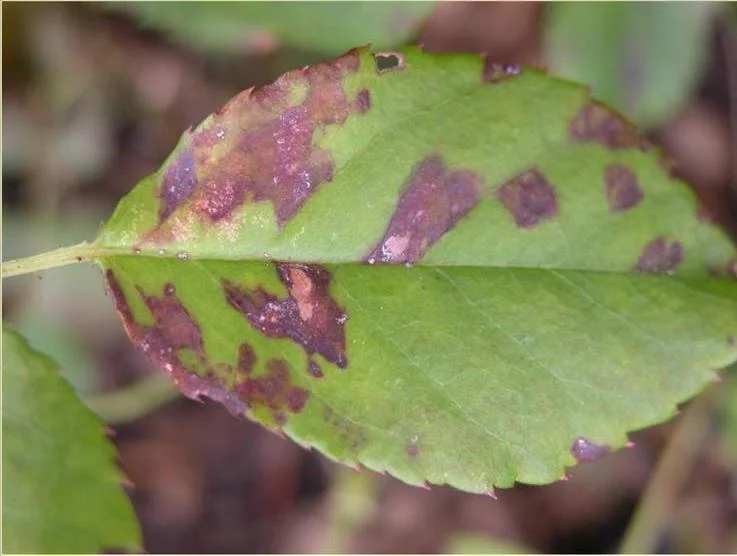
Downy Mildew
Downy mildew is the common name for a group of highly specialized obligate parasites of vascular plants.
-
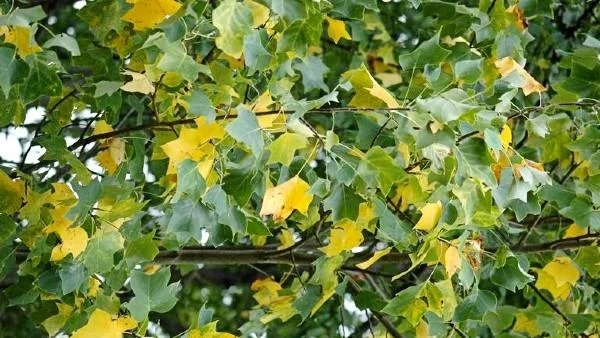
Drought
Drought can impact many types of woody plants in landscapes, natural woodlots, and forests.
-
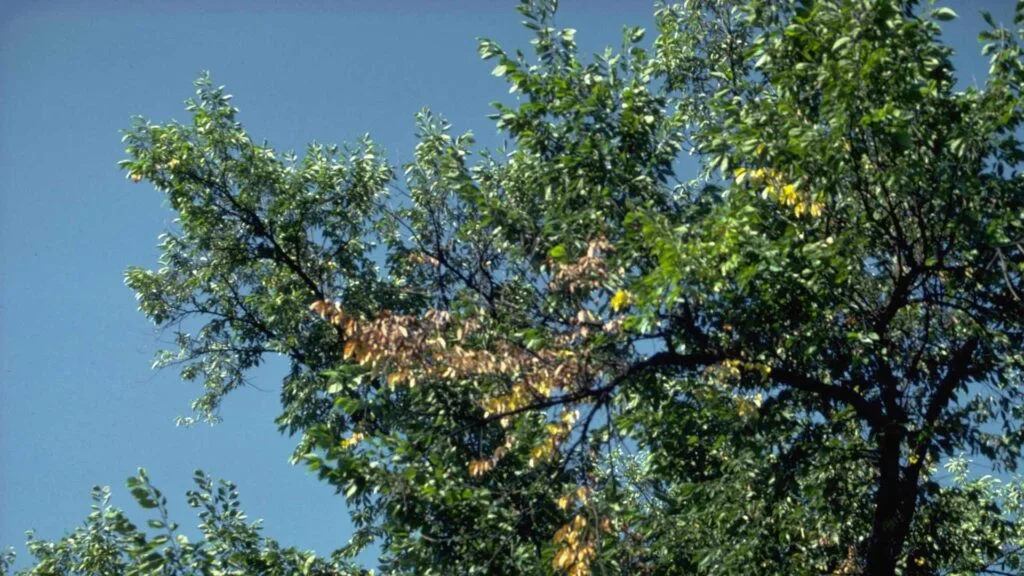
Dutch Elm Disease
Dutch elm disease (DED) is one of the most destructive shade tree diseases in North America. The disease affects American…
-
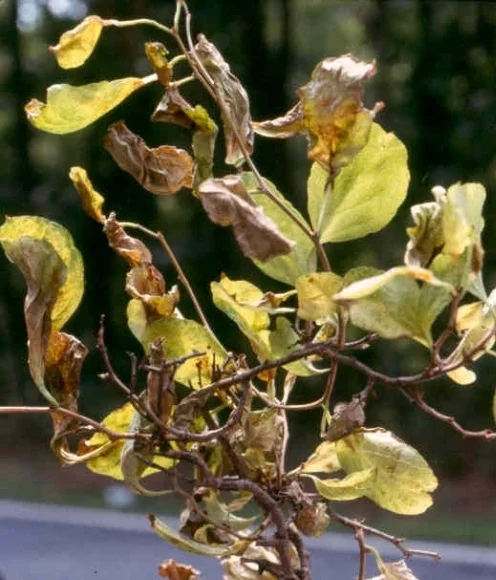
Elm Yellows
Elm yellows symptoms begin in mid to late summer with the chlorosis and drooping of petioles of turgid leaves and…
-
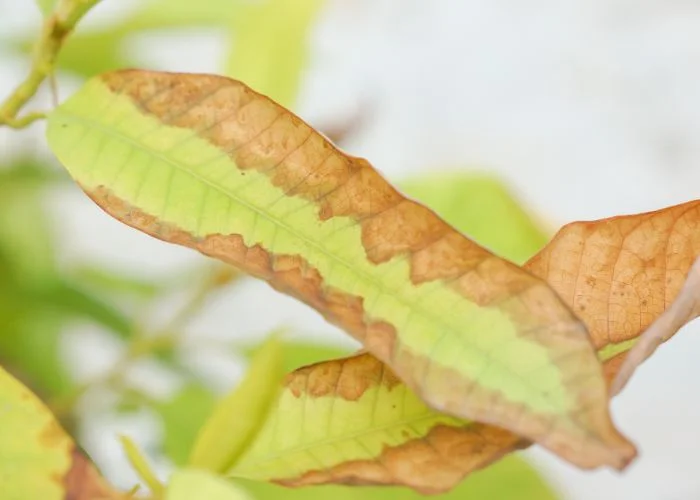
Excess Water
Excess water can be a serious problem for many woody ornamentals.
-
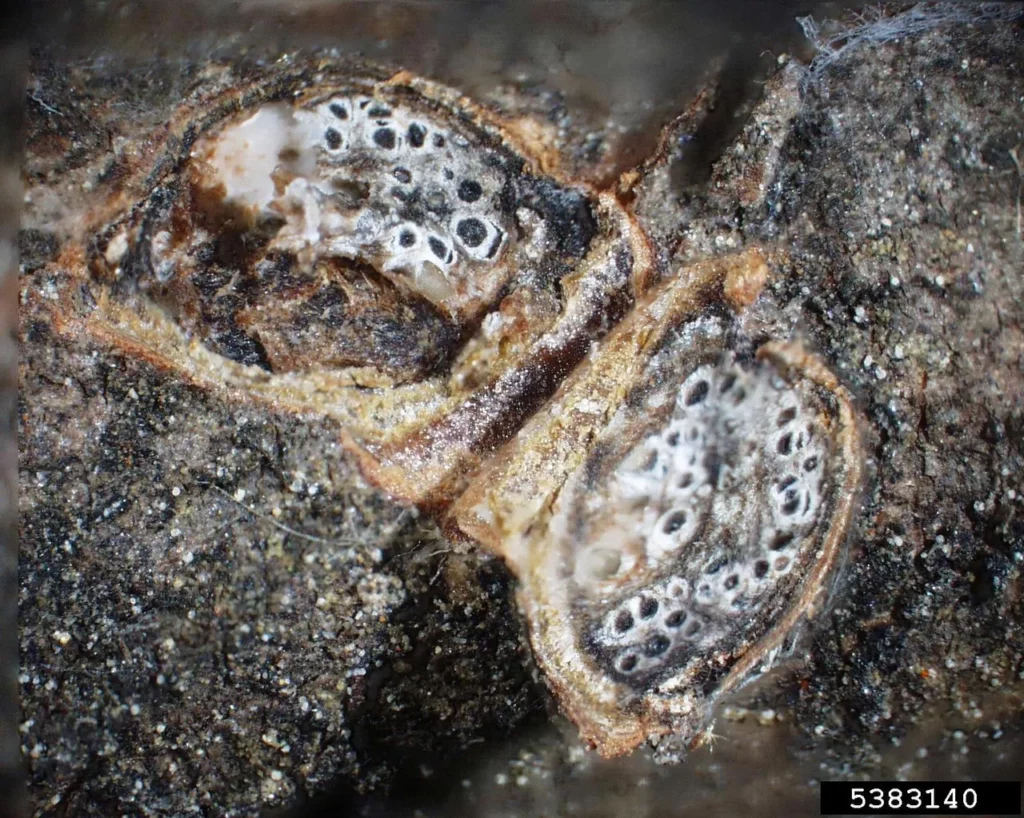
Filbert Blight
Eastern Filbert Blight is caused by the fungus Anisogramma anomala and is indigenous to the Northeast United States.
-
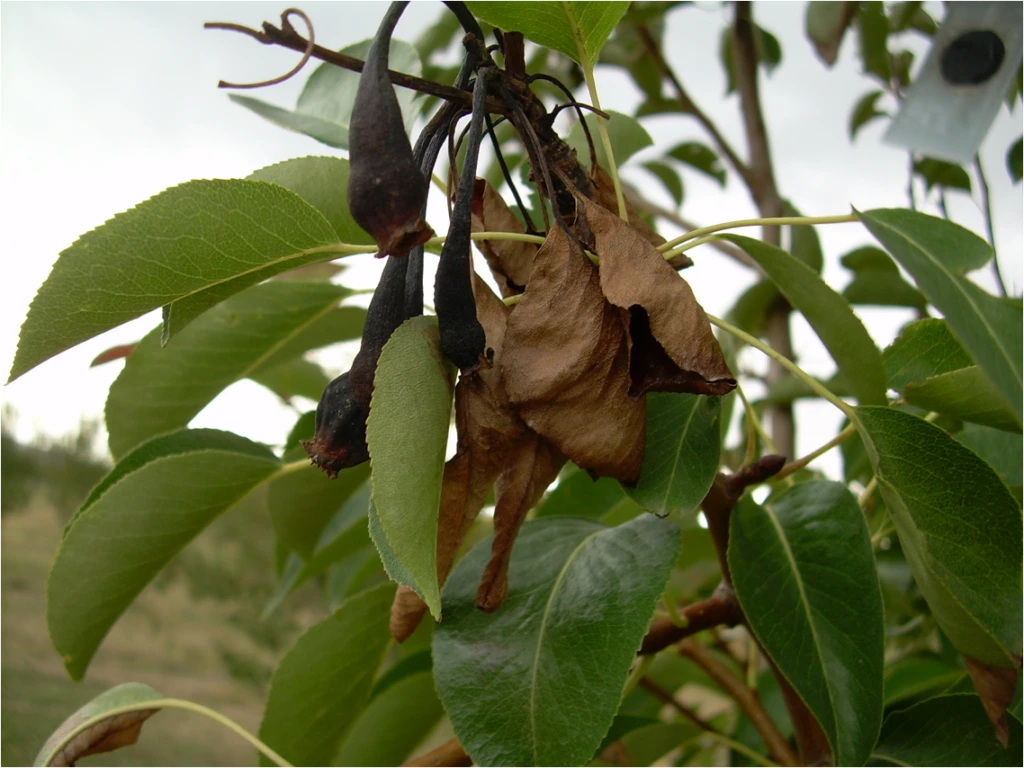
Fire Blight
Fire blight is a disease caused by the bacterium Erwinia amylovora. Twigs, branches, and leaders on trees and shrubs wilt…
-
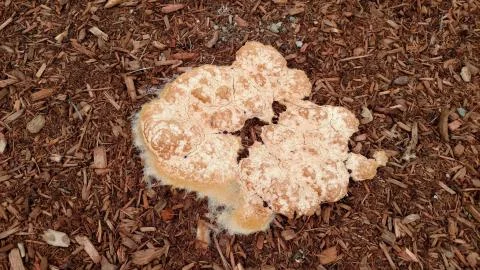
Fungus and Mold in Mulch
Bacteria and fungi help organic matter decompose, so it is only natural that such mulches will sometimes have fungi and…
-
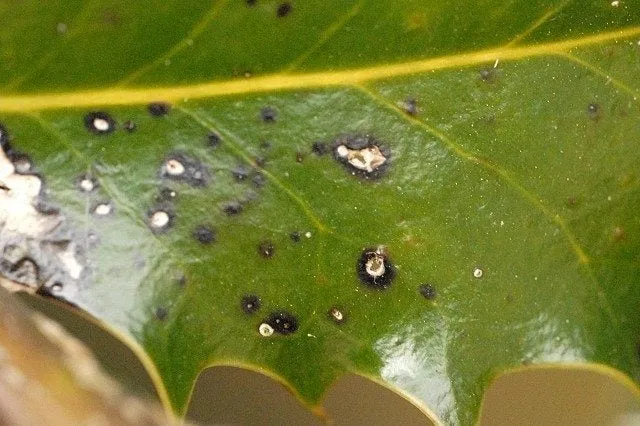
Holly Leaf Spot
The fungi Coniothyrium ilicinum and Phacidium species are two of several that regularly cause leaf spots on holly (Ilex) in…
-
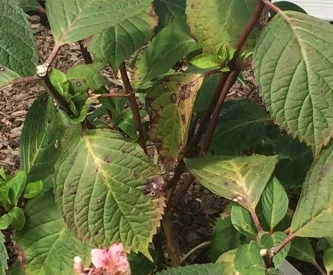
Hydrangea Foliar Diseases
An overview of Hydrangea diseases including Botrytis Blight, Cercospora Leaf Spot, Virescence and others.
-
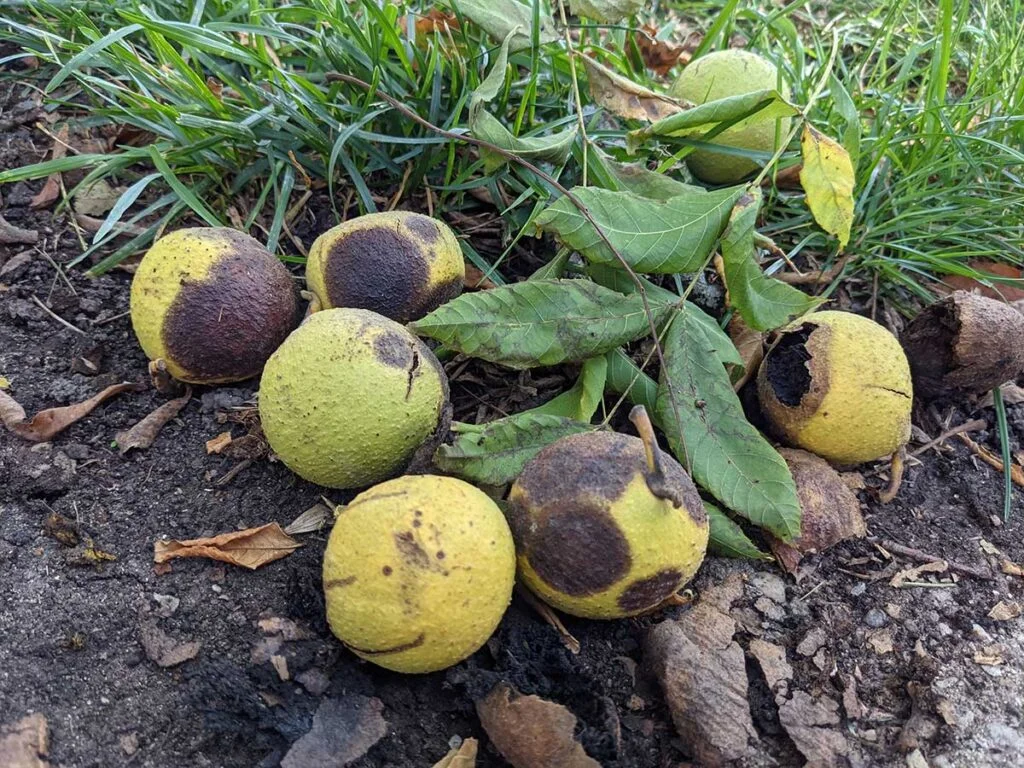
Juglone Toxicity
Walnuts and hickories produce the chemical juglone (5 hydroxy-1,4- napthoquinone), which is exuded from all parts of the plant.
-
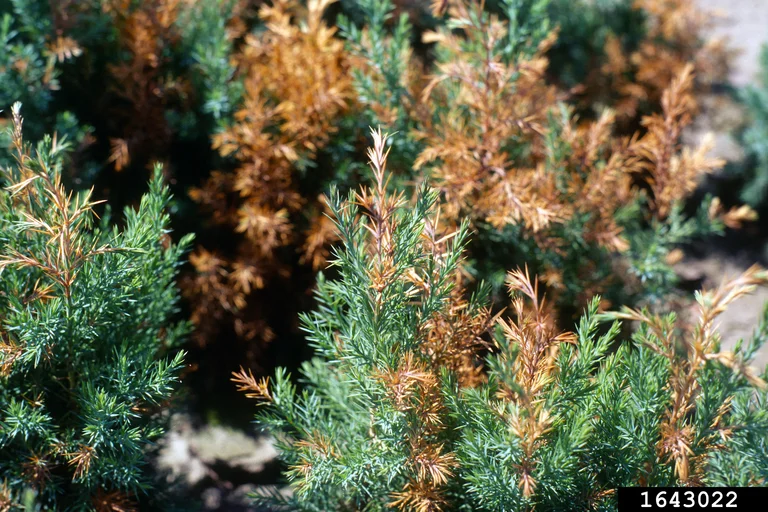
Juniper Diseases
An overview of Juniper diseases including cedar-apple rust, cercospora blight and more.
-
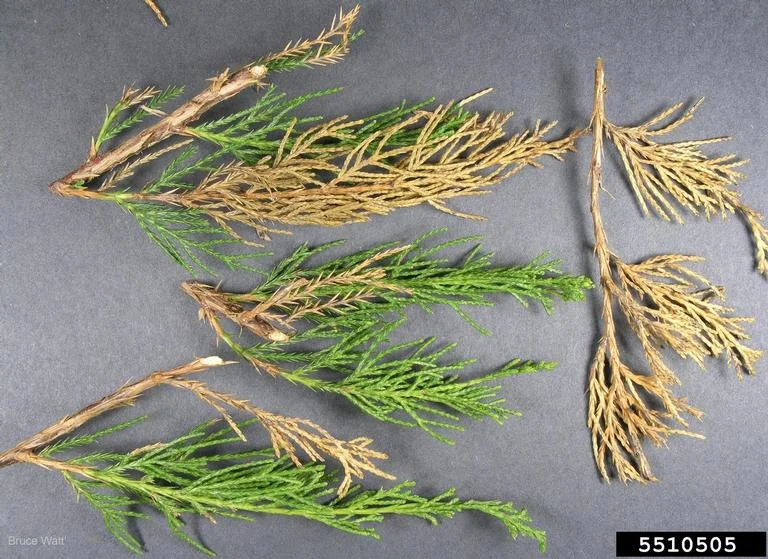
Juniper Twig Blight
Junipers (Juniperus sp.), also known as red cedars are susceptible to a disease that results in the death of twig…
-
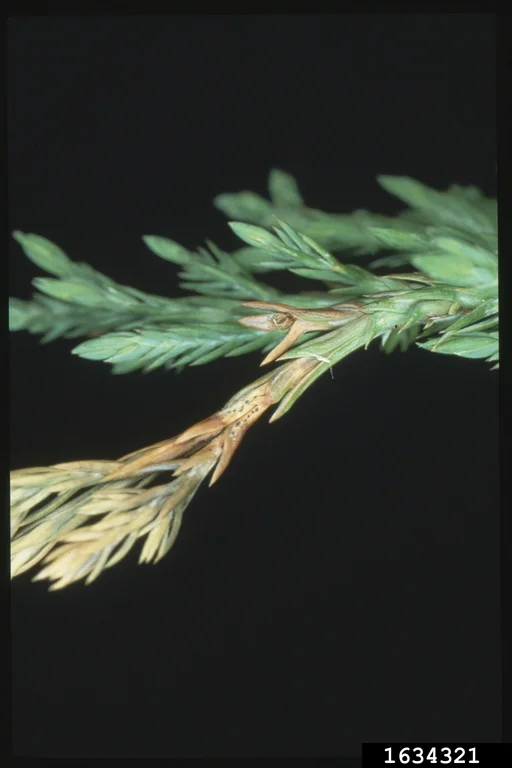
Kabatina and Phomopsis Twig Blight
The disease is most severe in nursery stock and seedlings where plants are grown closely together.
-
Landscaping and Gardening around Walnuts
Walnuts and hickories produce the chemical juglone (5 hydroxy-1,4- napthoquinone), which is exuded from all parts of the plant
-
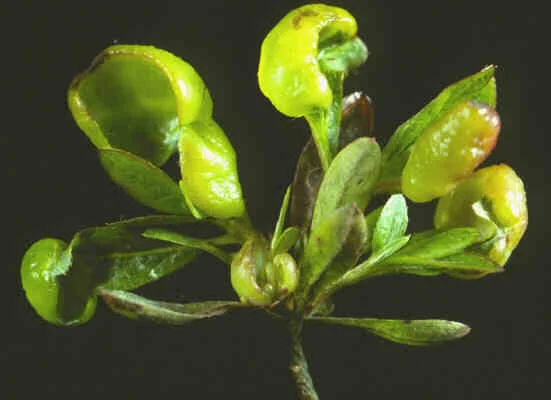
Leaf and Flower Gall
Leaf and flower galls are commonly found on many flowering woody hosts, most often on azalea and camellia.
-
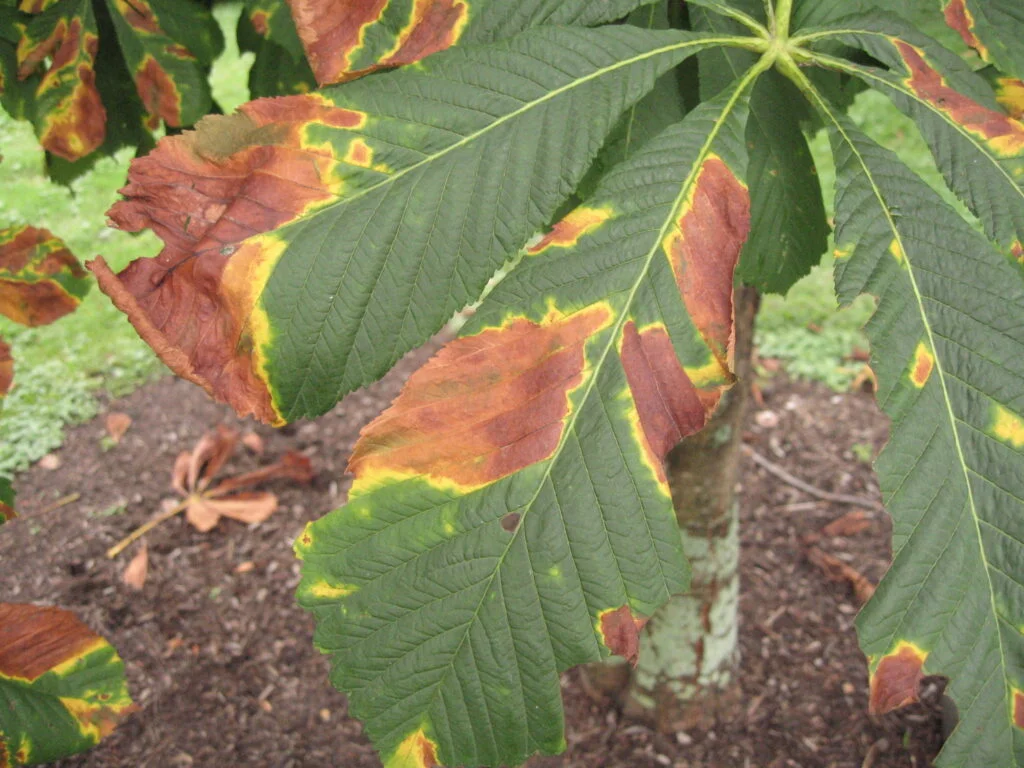
Leaf Blotch
Small irregular, reddish-brown spots and large blotches with yellow halos form in late June or early July. Most infected leaves…
-
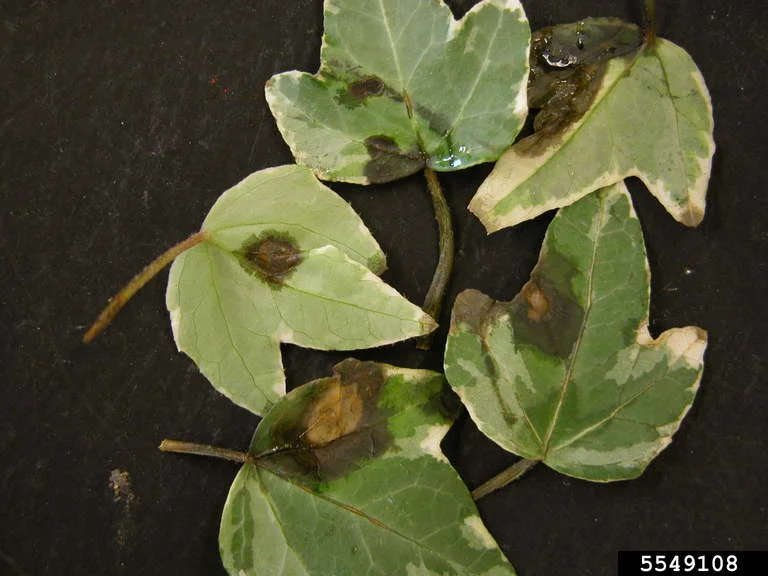
Leaf Spot Diseases on English Ivy
The English ivy is a hardy evergreen vine that is grown widely as a ground cover under trees and in…
-
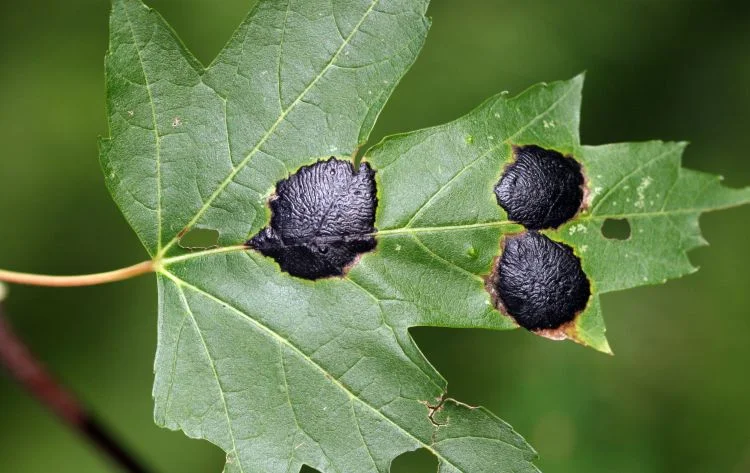
Leaf Spot Diseases on Shade Trees
Leaf spot is a common descriptive term applied to a number of diseases affecting the foliage of ornamentals and shade…
-
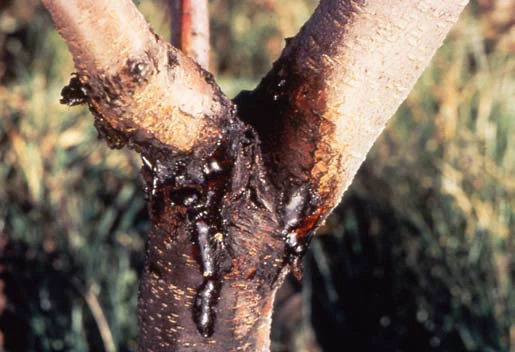
Leucostoma (Cytospora Canker)
Cytospora canker is one of the most destructive diseases of peaches, nectarines, apricots, sweet cherries, and plums in Pennsylvania.
-
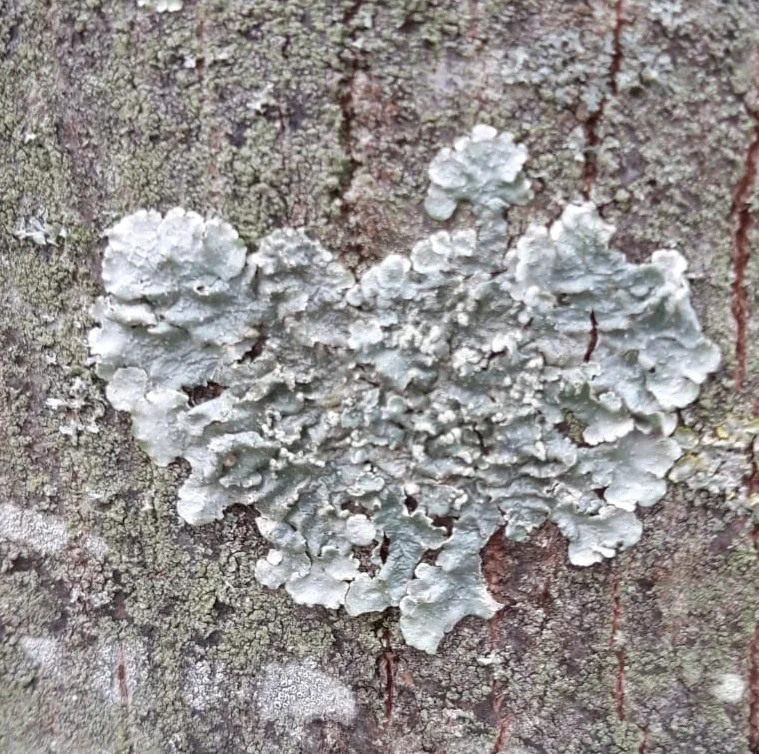
Lichens
https://ag.umass.edu/landscape/fact-sheets/pseudocercospora-leaf-spot-of-mountain-laurel
-
Mountain Laurel Leaf Spot
Leaf Spot on Mountain Laurel will have large, tan to brown spots on leaves with a dark line on their…
-
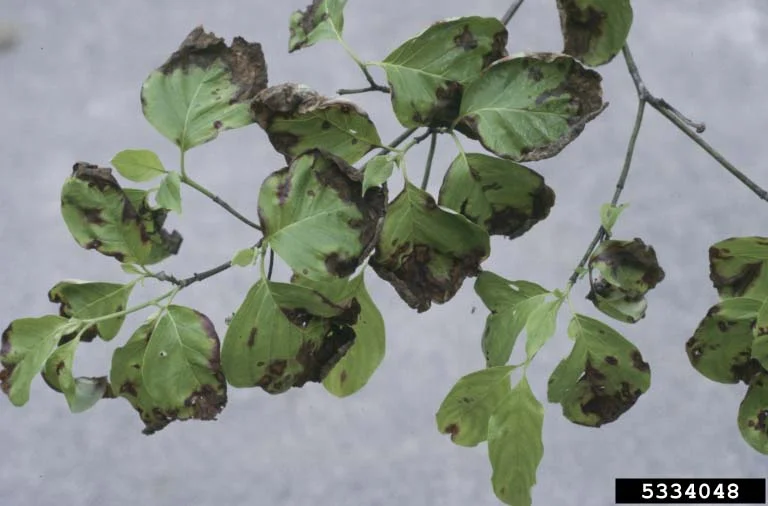
Overview of Dogwood Diseases
A look at diseases, symptoms, causes and management of diseases that can affect the Dogwood tree.
-
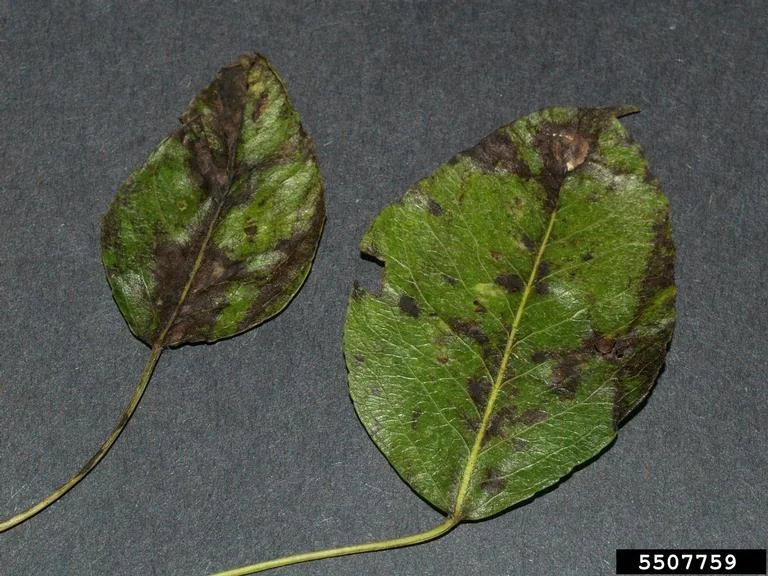
Pear Scab
Pear scab resembles apple scab in nearly all respects and is caused by the closely related fungus Venturia pirina.
-
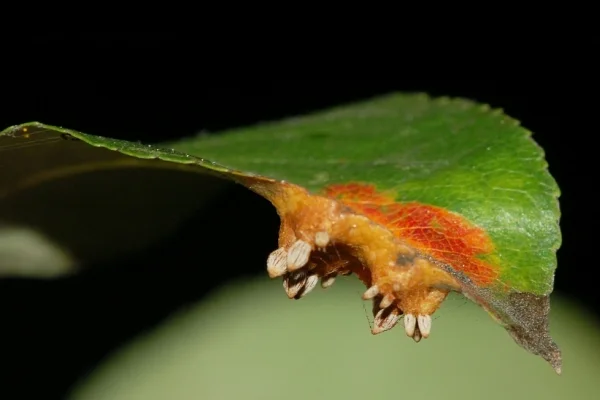
Pear Trellis Rust
ptoms on pear begin as yellowish-orange leaf spots early in the season. Young fruit and twigs can also be infected.
-
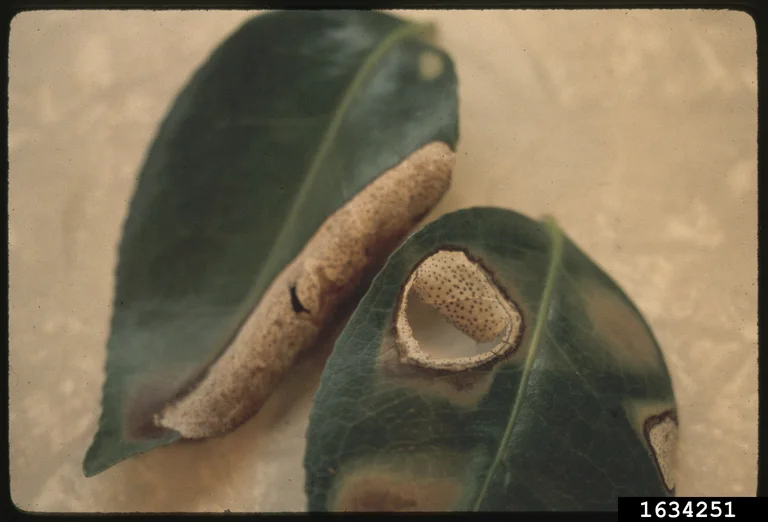
Pestalotiopsis
Pestalotiopsis is a type of needle blight fungal disease that is primarily found on arborvitae (Thuja). It is usually considered a secondary disease that attacks foliage that has been injured or weakened by unfavorable weather or growing conditions. The disease may kill the smaller twigs where the infected needles died
-
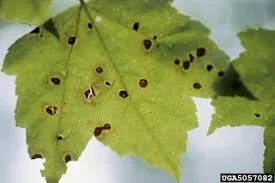
Phyllosticta
Witchhazel blight is caused by a fungus, Phyllosticta hamamelidis. The fungus causes brown lesions bordered by darker brown margins.
-
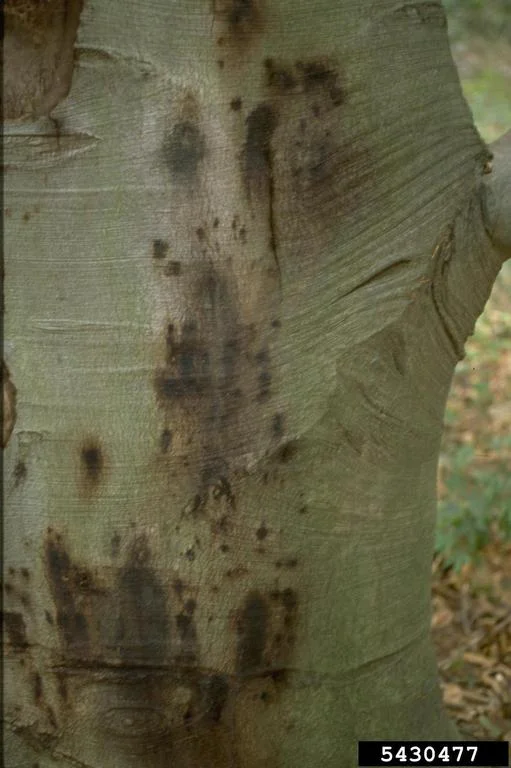
Phytophthora Bleeding Canker
Bleeding Canker is a potentially lethal disease to mature European Beech trees (Fagus sylvatica).
-
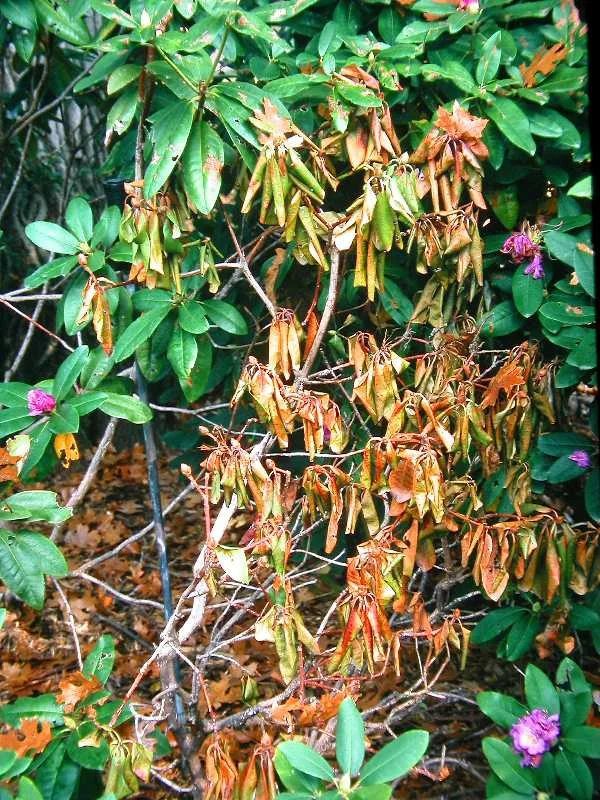
Phytophthora Root Rot and Crown Dieback
Fungus-like organisms belonging to the genus Phytophthora are soil- or plant-borne and all are plant pathogens.
-
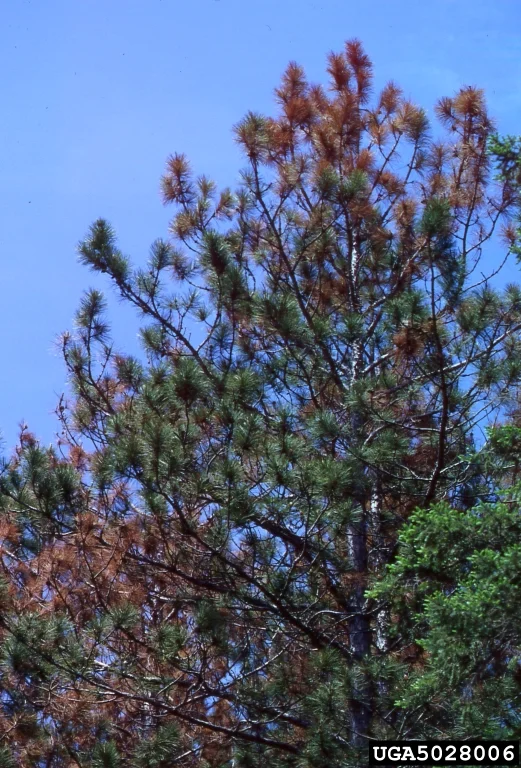
Pine Diplodia Tip Blight
Austrian, Scots, ponderosa, mugho, red and other 2 and 3-needled pines are susceptible to the killing of shoot tips and…
-
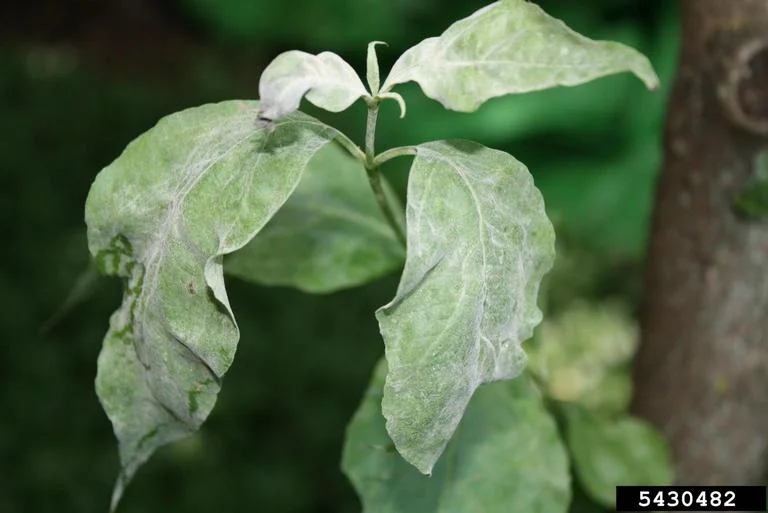
Powdery Mildew Cross Listing
While some powdery mildews attack a very few specific plants, others have a broad host range and infect many different…
-
Procera Root Rot
Procera root rot also known as white pine root decline is caused by a fungus. It infects the inner bark and sapwood of the roots and lower trunk of white pine.
-
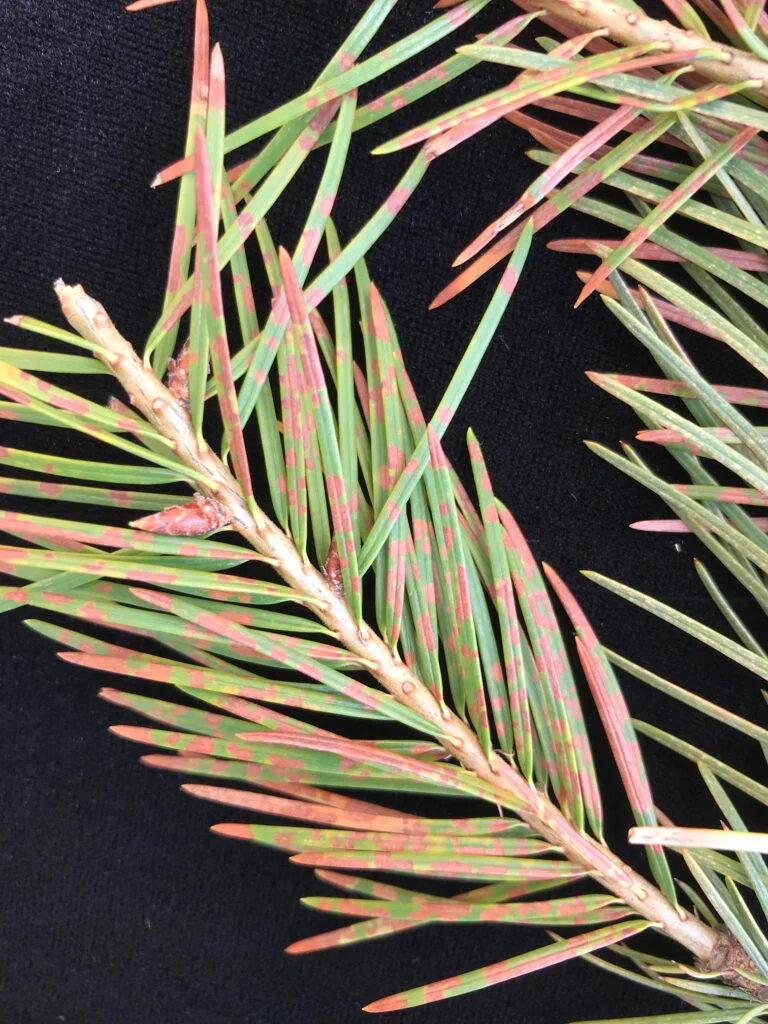
Rhabdcline Needle Cast
Douglas-fir is the only known host of Rhabdocline. Rhabdocline needle cast infection occurs around bud break, when buds are opening to expose susceptible immature needles
-
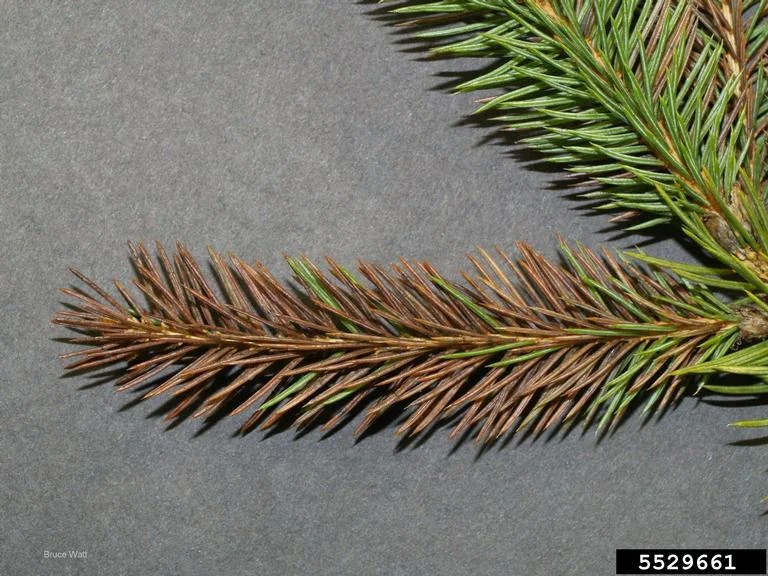
Rhizosphaera Needle Cast
Rhizosphaera needlecast disease is caused by the fungus Rhizosphaera kalkhoffii Bubak.
-
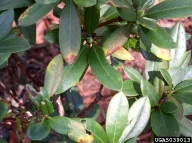
Rhododendron and Azalea Care
-
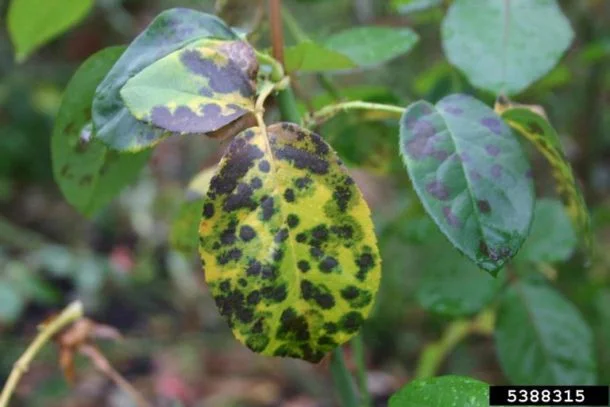
Rose Diseases
An overview of the types of diseases that affect the Roses.
-
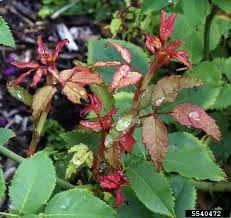
Rose Rosette Disease
Rose rosette disease has been spreading through much of the wild rose population of the Midwestern, Southern, and Eastern United States.
-
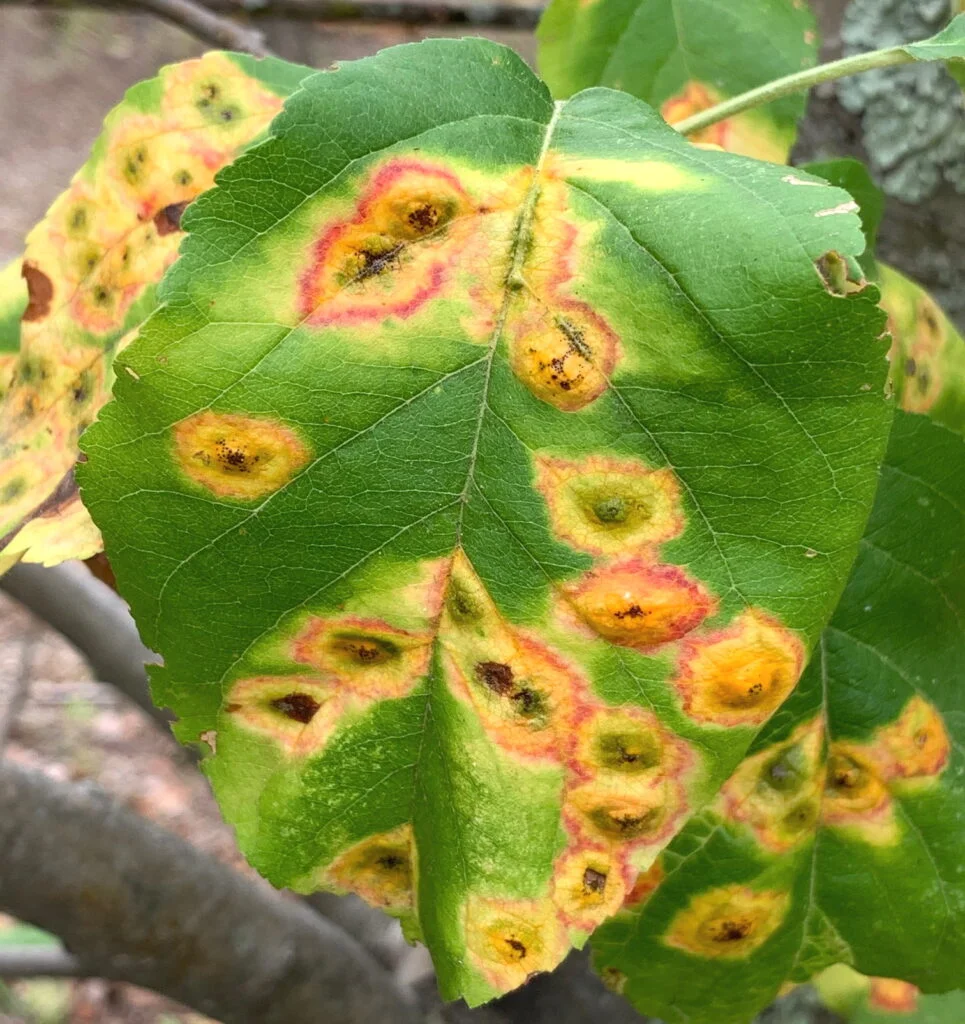
Rust
Cedar-apple rust and closely related diseases, cedar-quince, cedar-hawthorn, and Japanese apple rusts are caused by fungi belonging to the genus Gymnosporangium.
-
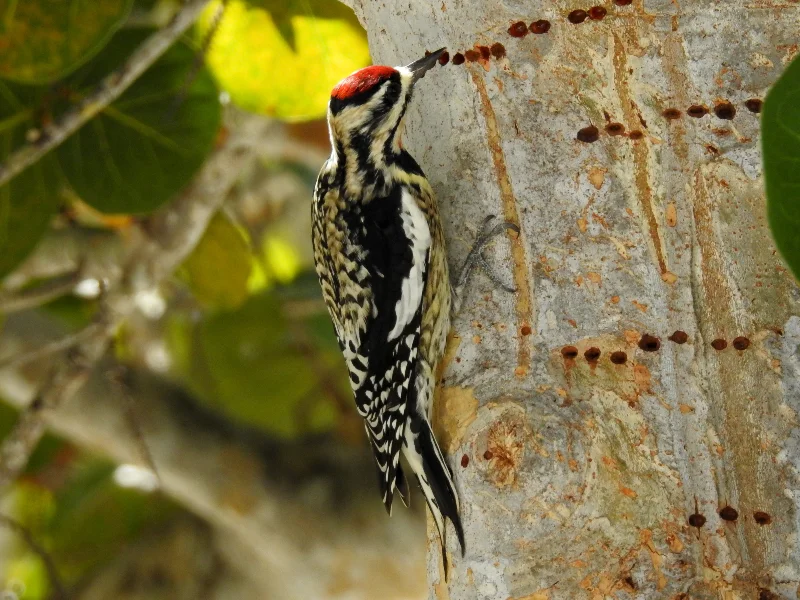
Sapsuckers
The yellow-bellied sapsucker is the only member of the woodpecker family to cause the type of injury from boring numerous drills holes in trees to drink sap.
-
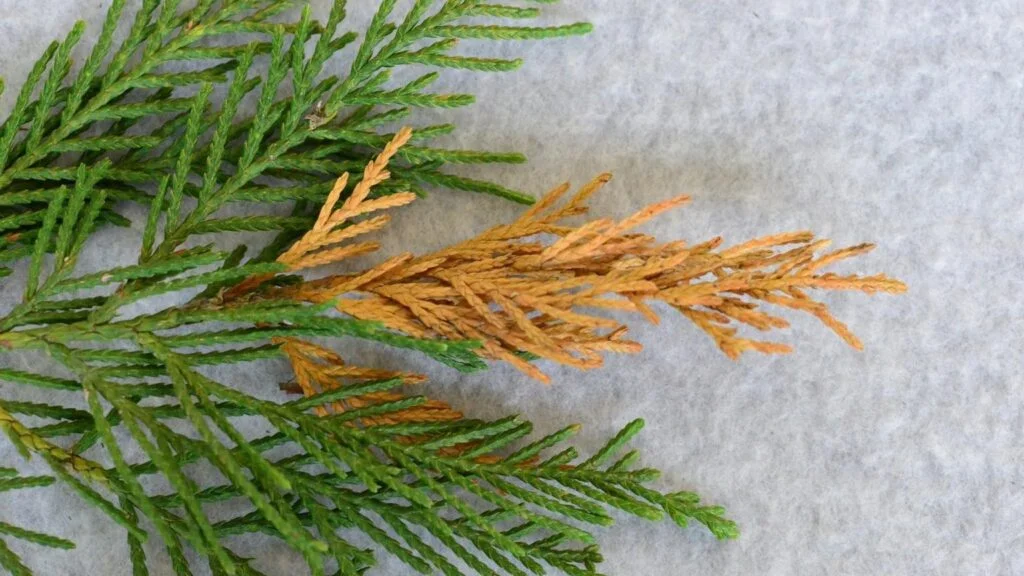
Seiridium Canker
Seiridium canker is perhaps the most significant and damaging disease on Leyland cypress. This fungus is commonly associated with both twig cankers and twig dieback.
-
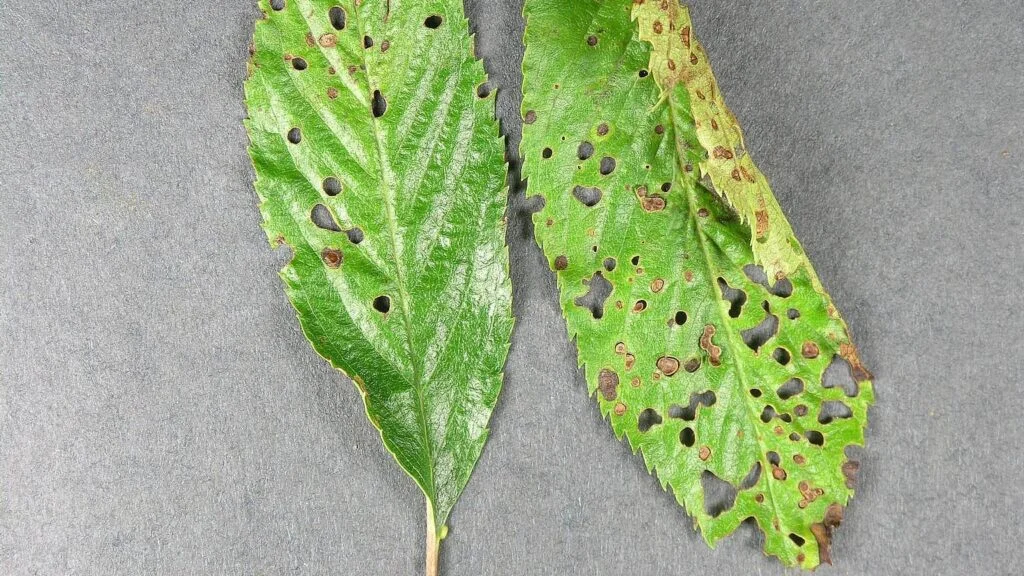
Shothole Disease
The shot-hole appearance of the leaves is where the disease-infected tissue dries up and falls out of the center of the leaf spot, leaving a hole about 1/8” inch in diameter. This disease literally appears as though someone were shooting a shotgun at the leaves of your tree, creating a random pattern of small shot-holes.
-
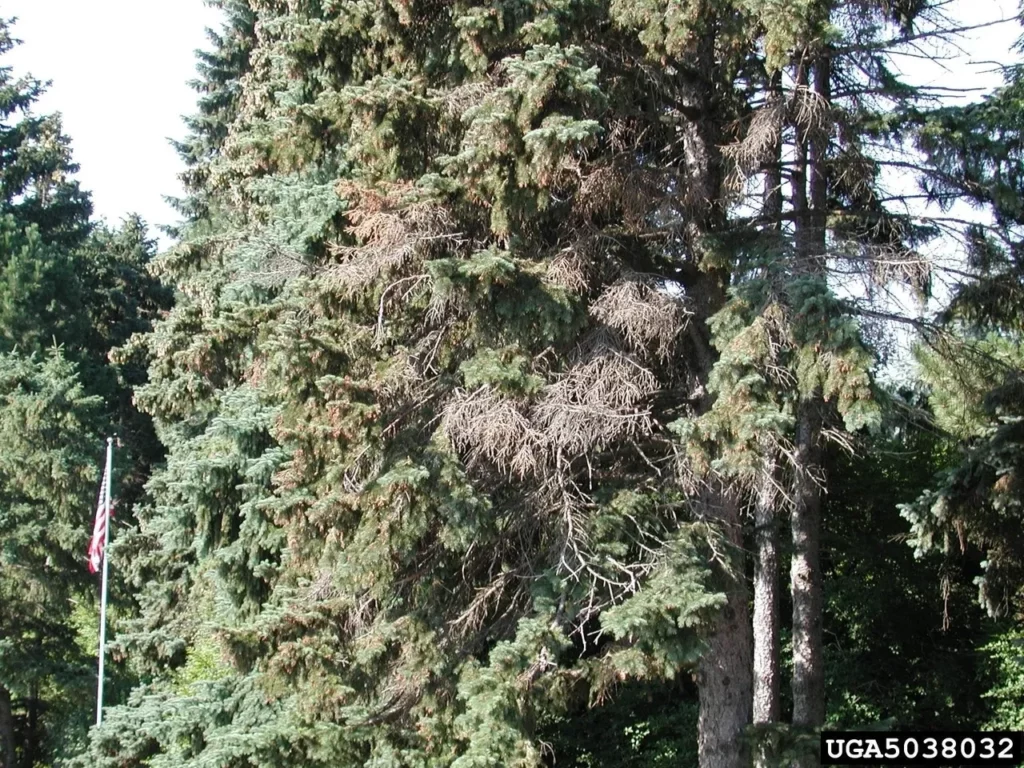
Spruce Cytospora Canker
Blue and Norway spruces are susceptible to a branch killing disease caused by the fungus Cytospora kunzei.
-
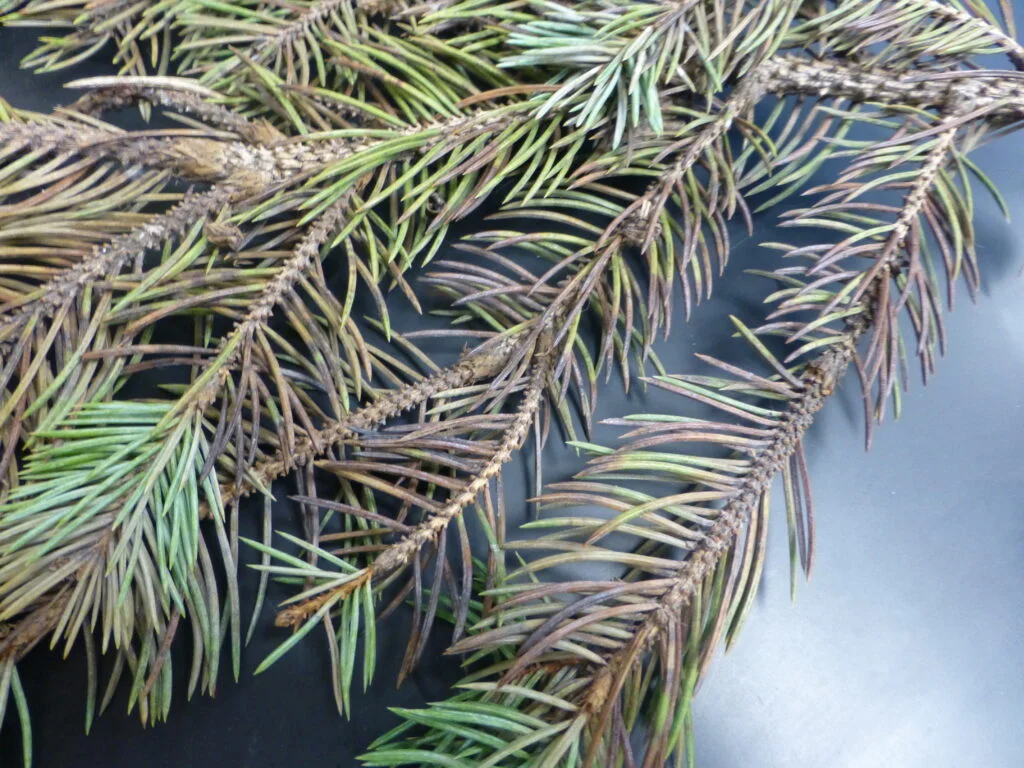
Stigmina Needle Cast
Prior to 1999, when Stigmina lautii was identified in North Carolina on blue spruce, this needle cast pathogen was only known from western Canada on black (P. mariana) and white spruce.
-
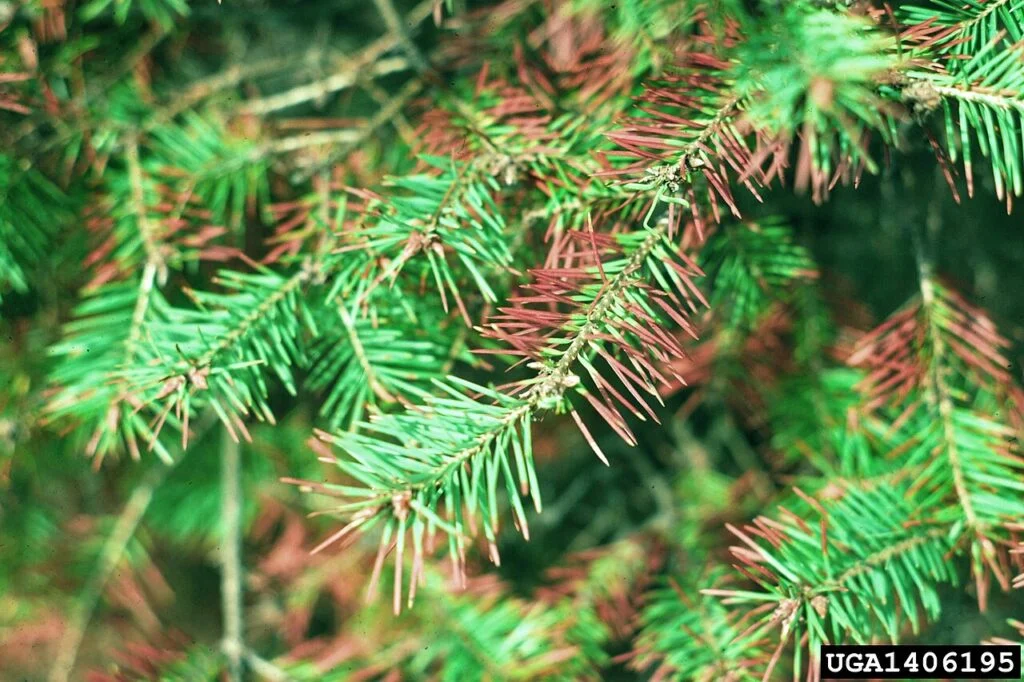
Swiss Needle Cast
Like most other fungal diseases, Swiss needle cast favors rainy, moist, and cool weather. Fruiting bodies develop through the stomata.
-
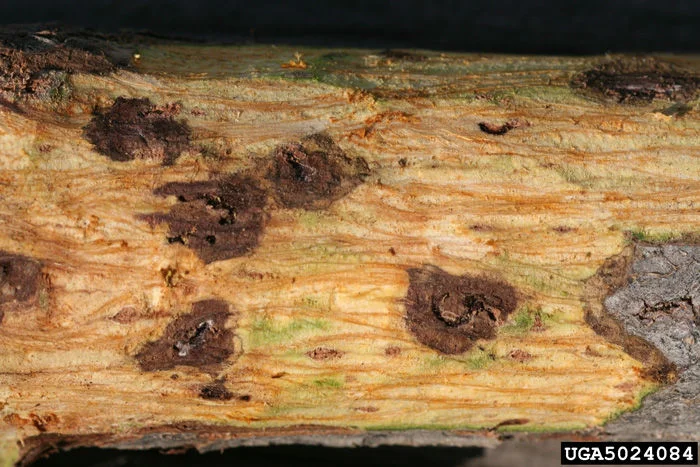
Thousand Cankers Disease
Thousand cankers disease (TCD) is a disease complex native to the western United States.
-
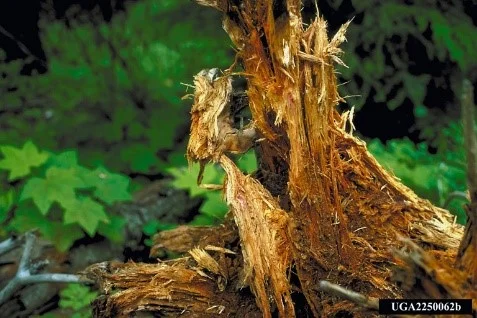
Tree Diseases That Cause Hazards
An overview of certain diseases of trees that weaken their structure and create a hazardous situations.
-
Volutella
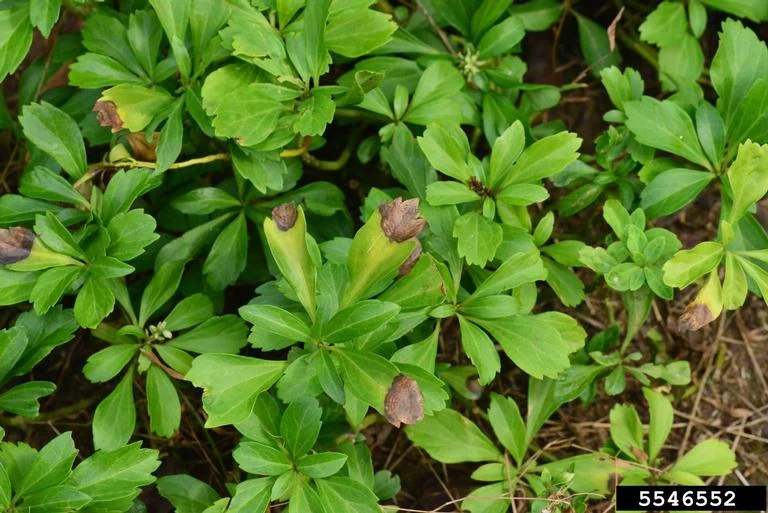
Leaf blight can be a very destructive disease on pachysandra. The disease is caused by the fungus Volutella pachysandrae, and may be worse where plants are under stress.
-
Volutella Blight
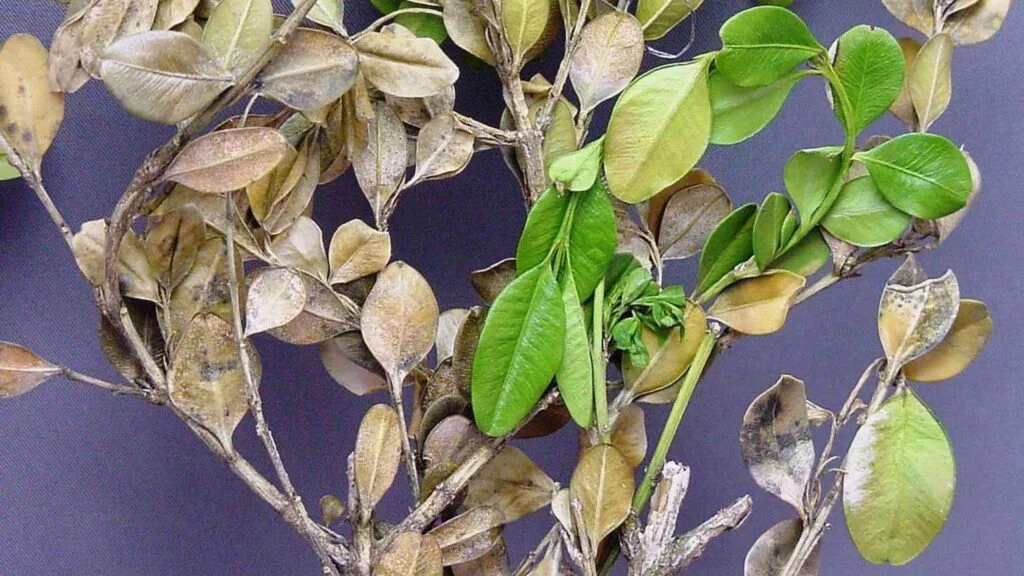
Brown to tan spots on the leaves are small at first but enlarge and may cover the entire leaf.
-
Winter Injury
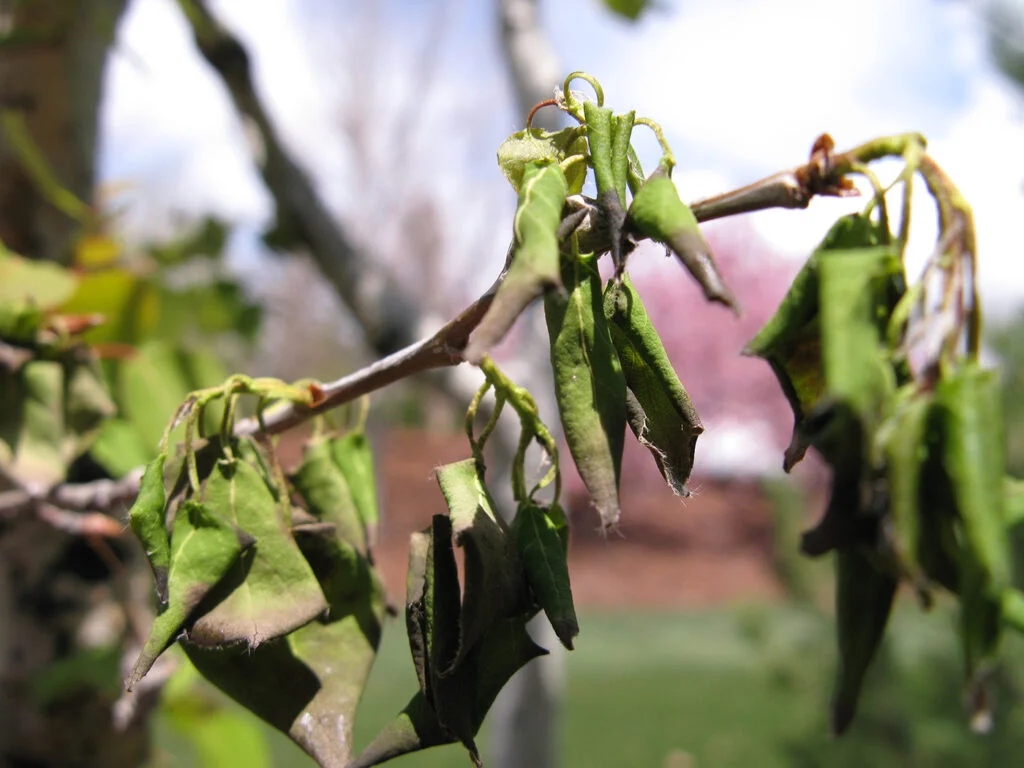
Weather conditions during the past few winters have been conducive for injury to woody ornamentals.