

-
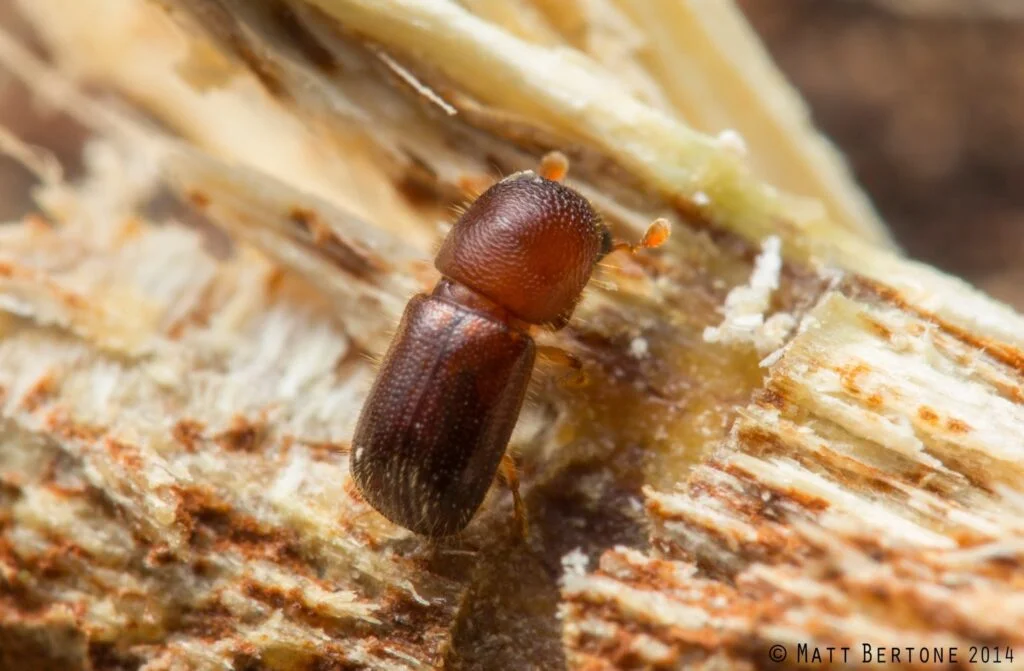
Ambrosia Beetle
Granulate ambrosia beetle was introduced to South Carolina from Asia in the early 1970’s.
-
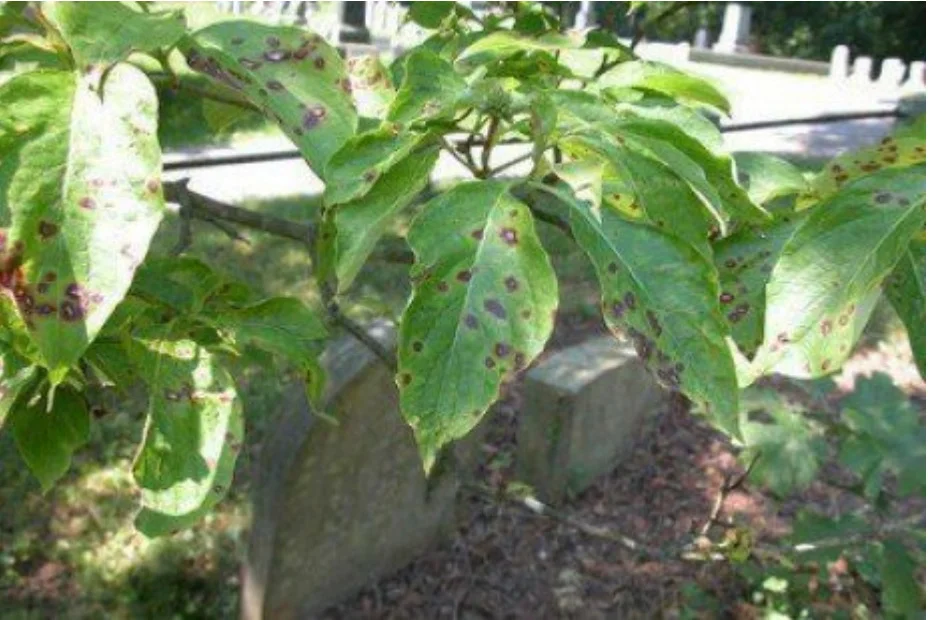
Anthracnose
Many deciduous hardwoods are susceptible to a leaf disease called anthracnose that is caused by various species of the fungus Anthracnose.
-
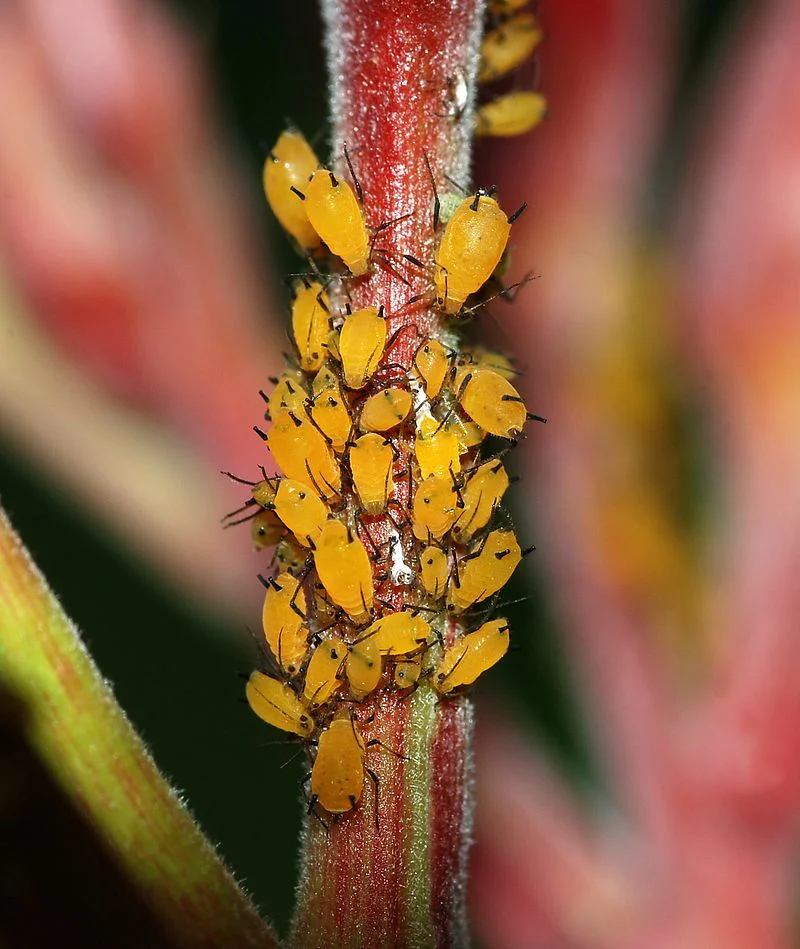
Aphids
Many species of aphids or plant lice occur on ornamental trees and shrubs in Pennsylvania.
-
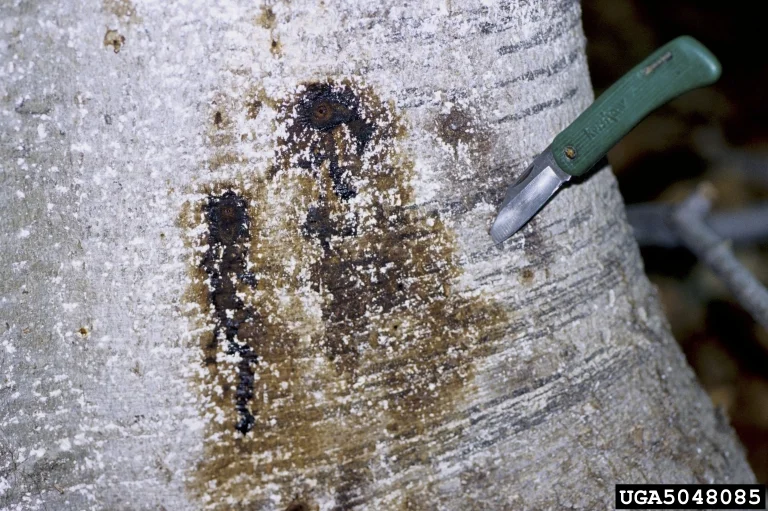
Beech Bark Disease
Beech bark disease causes significant mortality and defect in American beech, Fagus grandifolia (Ehrh.).
-
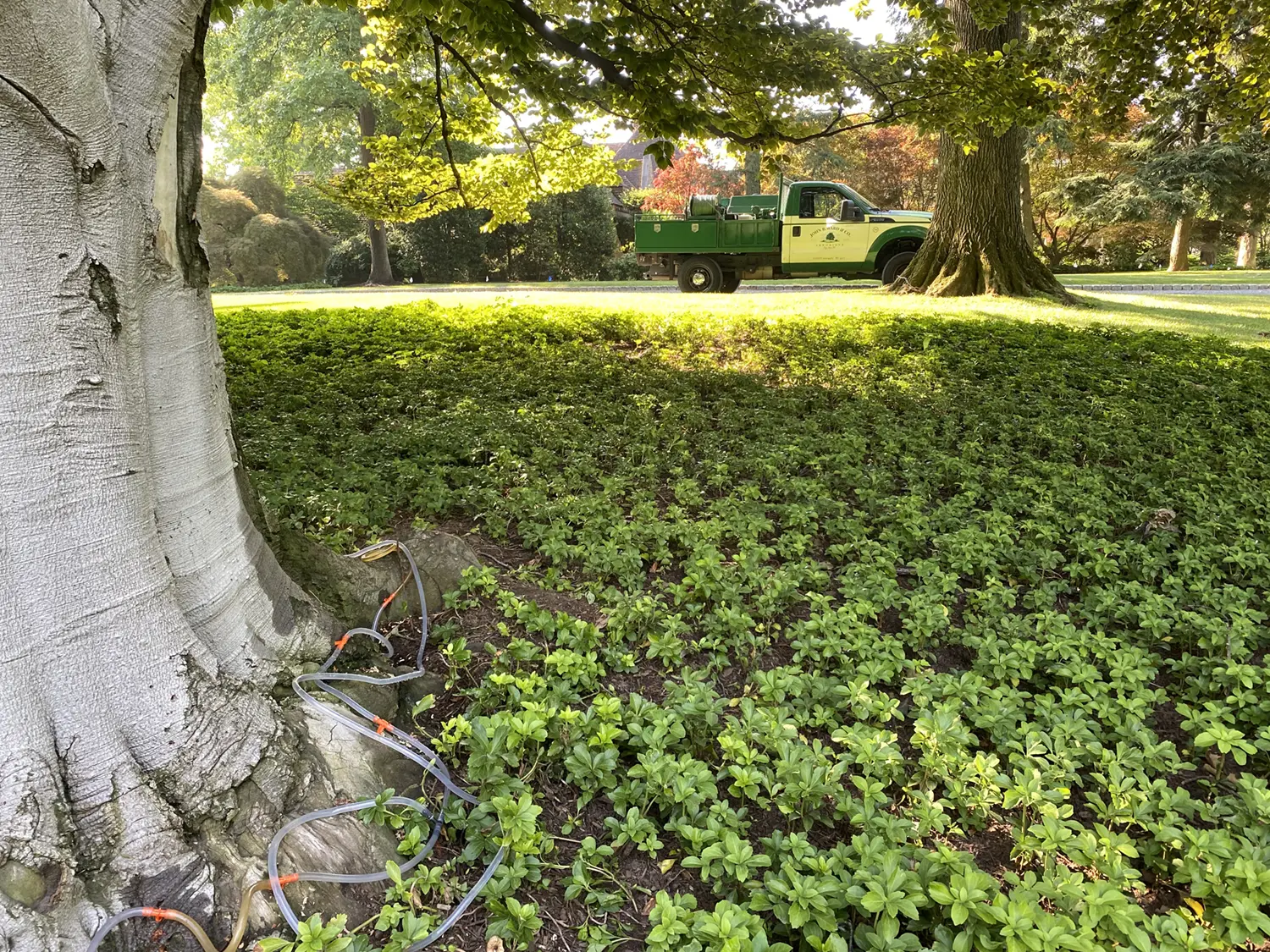
Beech Leaf Disease
Beech leaf disease (BLD) is caused by an invasive nematode Litylenchus crenatae subsp. mccannii. Nematodes are microscopic roundworms. Most nematodes are free-living, but some are parasites of animals and plants. Most plant parasitic nematodes live in soil moisture films and feed on plant roots. The nematode that causes BLD is unique in that it is found in the foliage of a tree rather than in the roots.
-
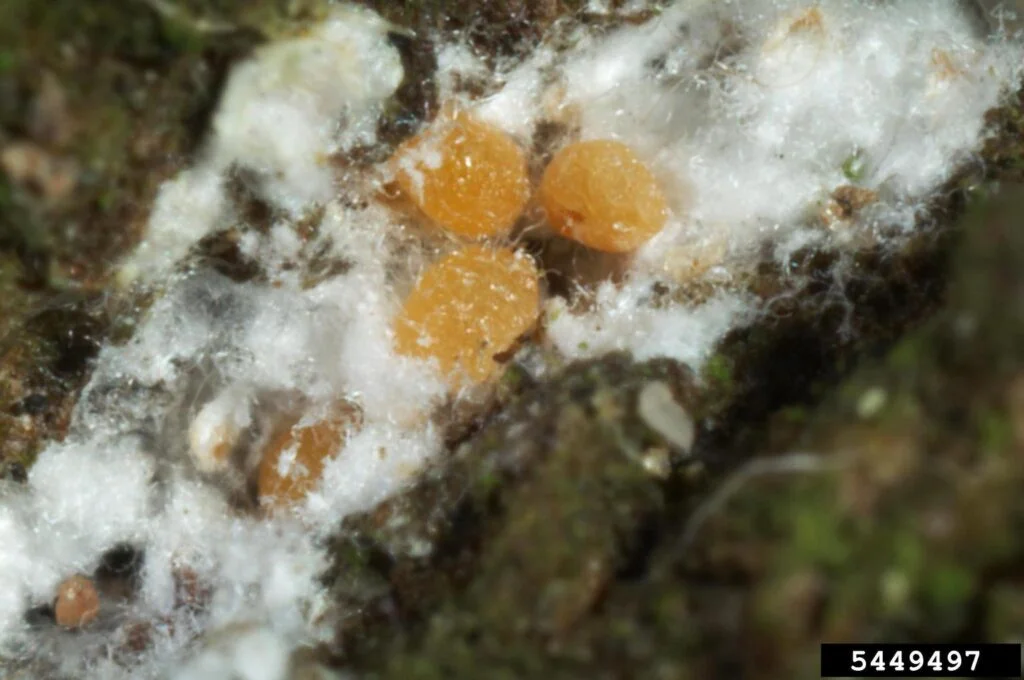
Beech Scale
The beech scale (Cryptococcus fagisuga Lindinger) was first found in the U.S. in Massachusetts and Maine in the 1930s.
-
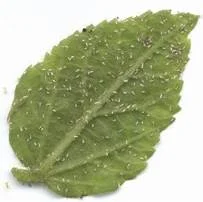
Foliar Aphids
Many species of aphids or plant lice occur on ornamental trees and shrubs in Pennsylvania.
-
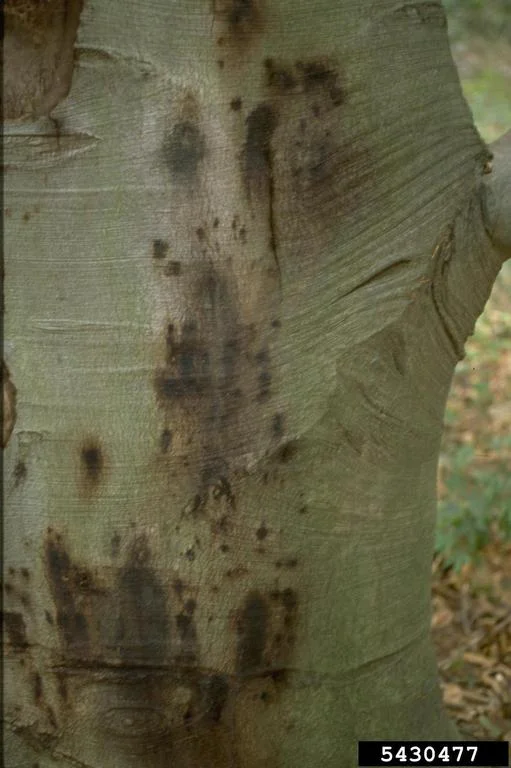
Phytophthora Bleeding Canker
Bleeding Canker is a potentially lethal disease to mature European Beech trees (Fagus sylvatica).
-
Spotted Lantern Fly
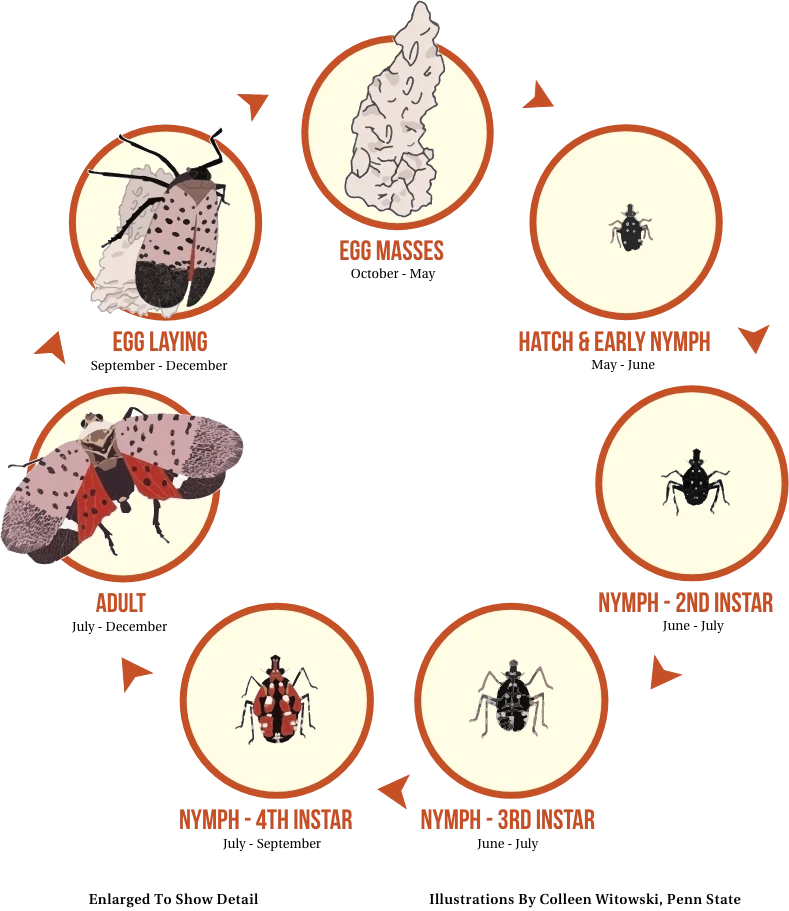
Lycorma delicatula , commonly known as the Spotted Lanternfly (SLF), is a new invasive insect that has spread throughout southeastern Pennsylvania since its discovery in Berks County in 2014. SLF presents a significant threat to Pennsylvania agriculture, including the grape, tree-fruit, hardwood and nursery industries, which collectively are worth nearly $18 billion to the state's economy.
-
Two-lined Chestnut Borer
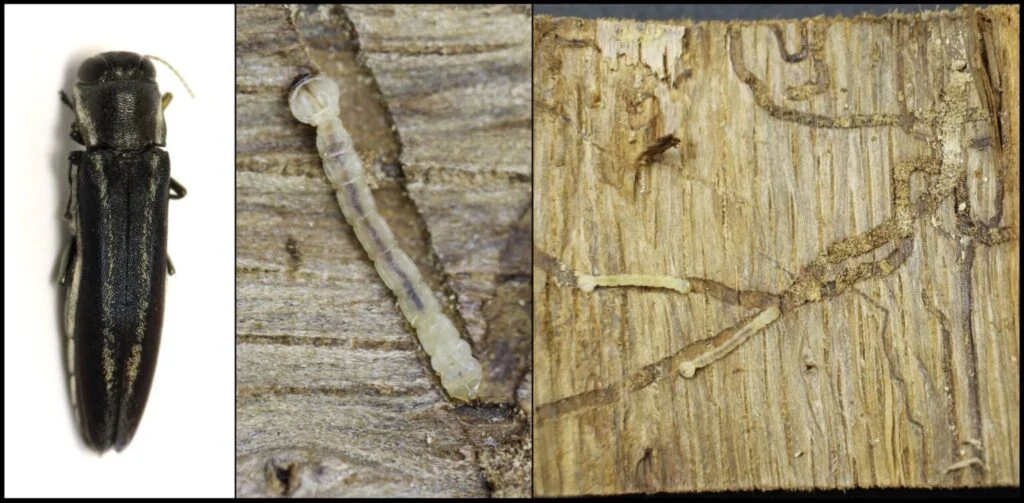
Adult two-lined chestnut borers are slender, black beetles with a bluish to greenish hue that are 1/5-1/2 inch (5-13 mm) long with two faint, yellowish stripes along their back. Larvae are legless, white, slender, and about 1 inch (2.5 cm) long when fully grown with two spines at the tip of the abdomen and have an enlarged, flattened front end, characteristic of the Buprestidae.
-
Woolly Beech Aphids
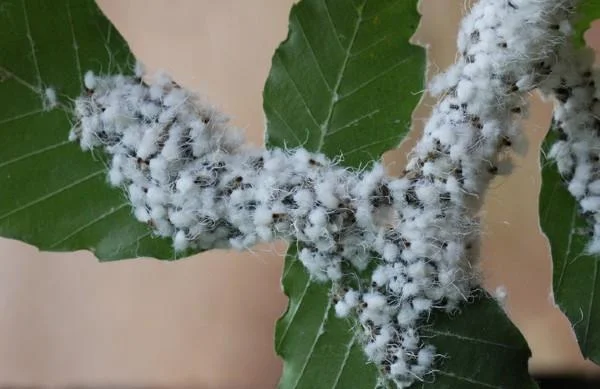
These sap-sucking insects cover themselves with waxy filaments to deter predators.