

Magnolia Archives
Insects and diseases that can affect Magnolia (Magnolia).
-
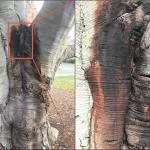
Bleeding Canker
Phytophthora bleeding canker kills the bark and outer sapwood tissues of trees and shrubs. The most prominent symptom of the disease is dark-colored sap oozing from bark cankers. The fluid is typically reddish-brown and it stains the surrounding bark as it flows downward. Infected bark is often water soaked and stained while the inner sapwood can exhibit a range of abnormal colors (brown, bluish-green, orange and pink) depending on the particular species of Phytophthora present.
-
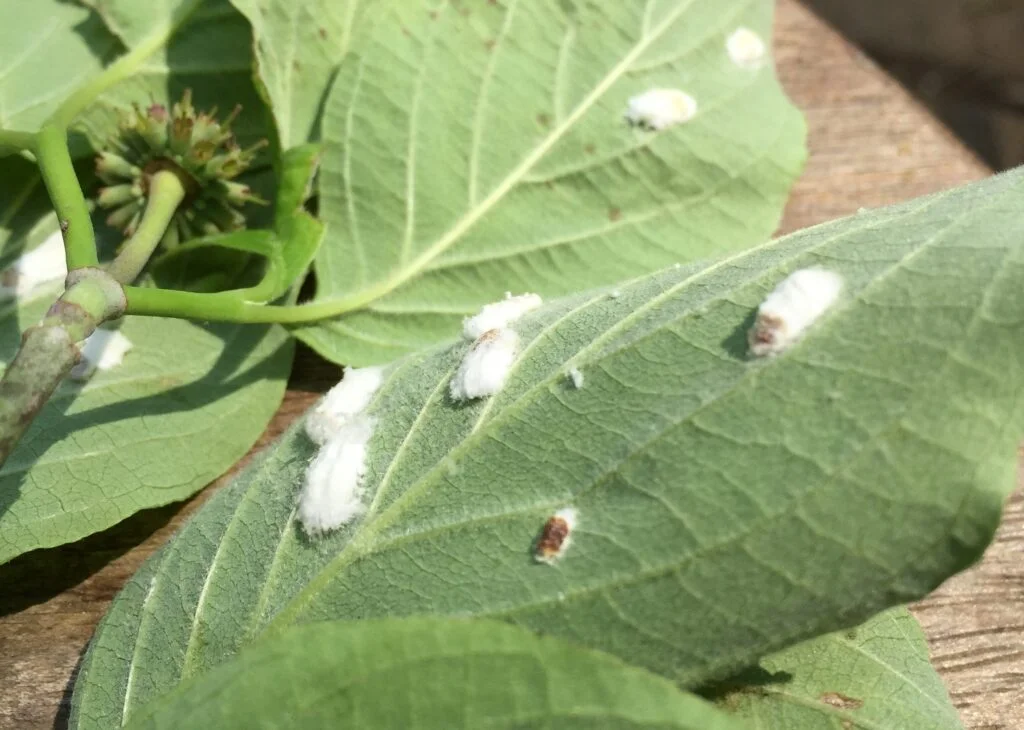
Cottony Maple Leaf Scale
Cottony maple leaf scale females are 3 to 4mm long and 2 to 4mm wide. They are slightly convex and are brown with a yellow-brown ridge down the back. The body is covered with flakes of clear wax. Their eggs are white to pale yellow and are meshed in a white, cottony ovisac which may be up to 5mm wide and 12mm long. Newly hatched nymphs are pale yellow or green and translucent. They closely adhere to the undersides of leaves and are easily overlooked.
-
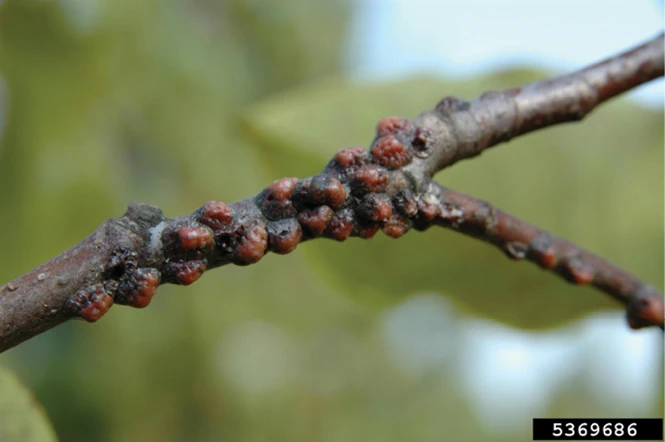
Magnolia Scale
The magnolia scale is one of the largest scale insects in the United States. It feeds only on magnolia. This…
-
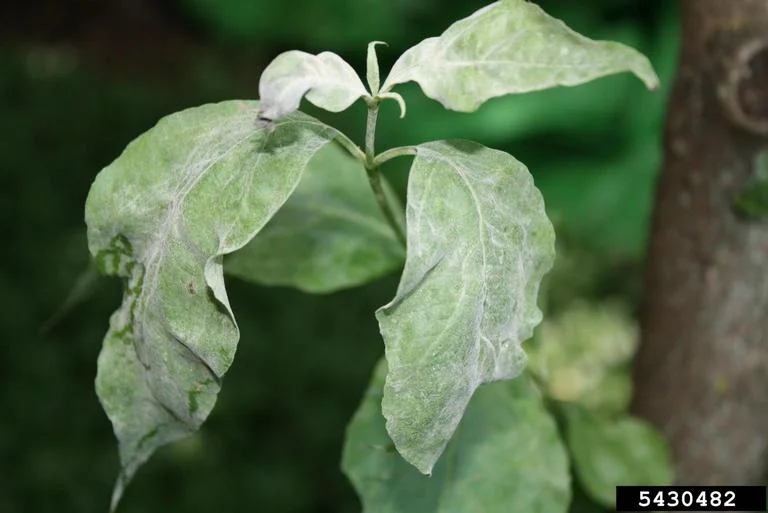
Powdery Mildew Cross Listing
While some powdery mildews attack a very few specific plants, others have a broad host range and infect many different…
-
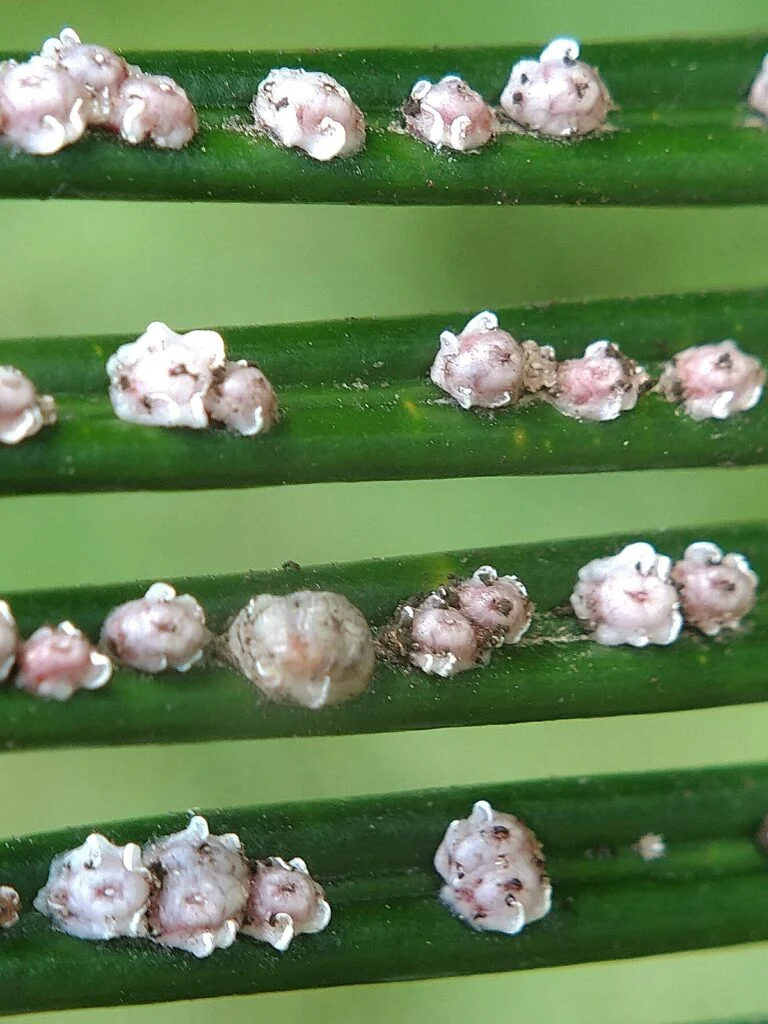
Scale Insects Fact Sheet
U.S. quarantine notes This species was intercepted 131 times at U. S. ports-of-entry between 1995 and 2012, with specimens originating from Brazil, China, France, India, Japan, Singapore, South Korea, Togo, and Vietnam.
-
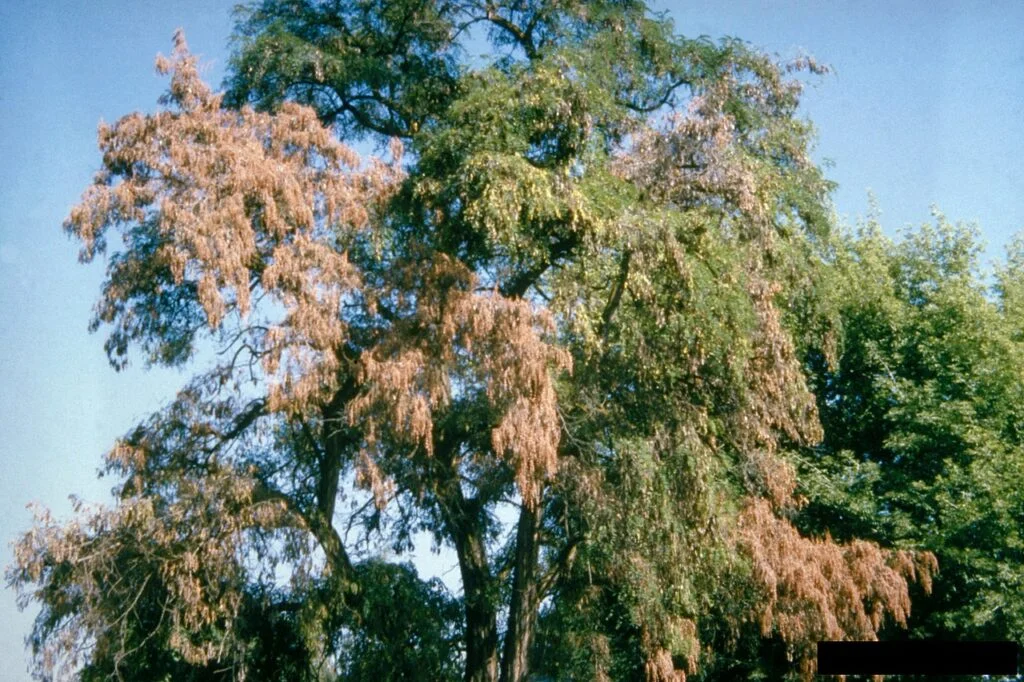
Verticillium Wilt
Early indications that a tree has Verticillium wilt include heavy seed production, leaves that are smaller than normal, and the browning of the margins of leaves.