Forsythia
Forsythia
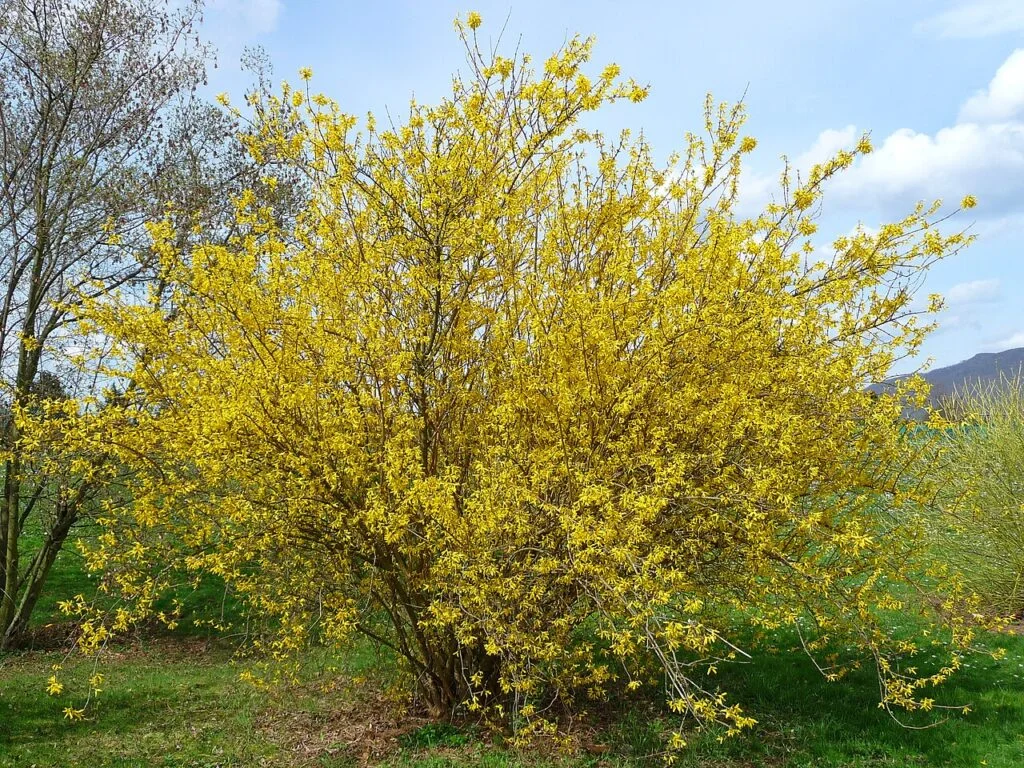
Forsythia are deciduous shrubs typically growing to a height of 1–3 m (3 ft 3 in – 9 ft 10 in) and, rarely, up to 6 m (20 ft) with rough grey-brown bark. The leaves are borne oppositely and are usually simple, though sometimes trifoliate with a basal pair of small leaflets; they range between 2 and 10 cm (0.79 and 3.94 in) in length and, rarely, up to 15 cm (5.9 in), with a margin that is serrated or entire (smooth). Twigs may be hollow or chambered, depending on the species.
The flowers are produced in the early spring before the leaves, bright yellow with a deeply four-lobed flower, the petals joined only at the base. These become pendent in rainy weather thus shielding the reproductive parts. The fruit is a dry capsule, containing several winged seeds.

Diseases Affecting Forsythia
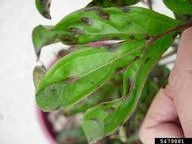
Bacterial Blight
Bacterial blight of lilac, also known as shoot or blossom blight, is caused by the bacterium Pseudomonas syringae pv. syringae. The pathogen is capable of causing damage to all types of lilacs including Japanese, Chinese, Persian and common varieties. Some researchers suggest that white flowering varieties may be more susceptible to infection than other varieties.…
Insects Affecting Forsythia
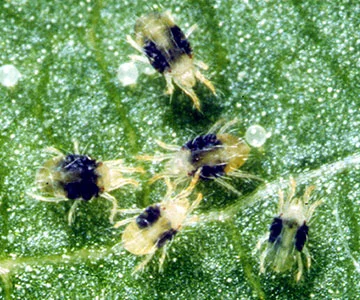
Two-Spotted Spider Mite
This plant pest seems to feed on just about everything in the landscape. Two-spotted spider mites reproduce faster and have more generations per year when the weather is hot, consistently in the upper 80’s. Its host range is vast including annual flowers, ornamental grasses, herbaceous perennials, and woody trees and shrubs.
Affected Species:
Please give us a call if you have any questions about your trees and shrubs or would like to schedule an appointment for us to walk your property.

610.525.1562