



In the 18th and 19th centuries, trees from all over the temperate world were planted, and artfully arranged, on the estates of the British aristocracy. Among them were oaks, maples, Tulip poplars, sassafras, and dogwoods. American trees collected and shipped to England by Philadelphia nurseryman John Bartram.
USDA Plant Hardiness Zones are based on average annual winter temperatures — specifically, the coldest temperature a plant can withstand. Zones are numbered from 1 (north central Minnesota) to 13 (the Florida Keys). Because of the trend toward milder winters, in 2024 our region was moved from Zone 6 to Zone 7, which is very forgiving and mildly temperate.
Reciprocally, English immigrants planted English trees —
most notably the iconic English elm — on their American estates. John Penn, grandson of William Penn, planted English elms at Solitude, his country house on the west bank of the Schuylkill River a few miles northwest of the city. The City of Philadelphia purchased the property from the Penn family in 1869 and leased it to the Zoological Society of Philadelphia
in 1874. The land and the house became part of America’s
first zoo.
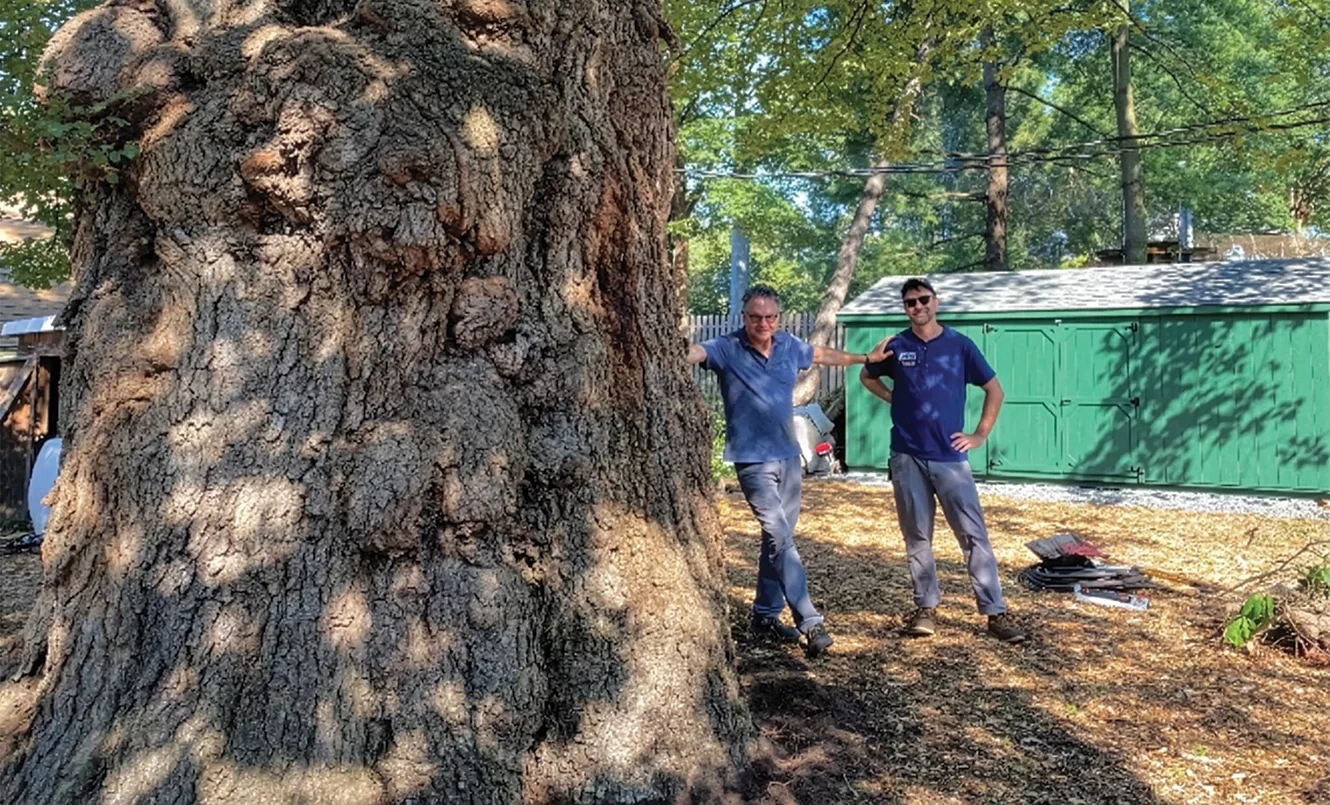
The house, a perfect cube measuring 30′ x 30′ x 30′, remains along with a magnificent remnant English elm. Approximately 93 feet tall, with a 93-foot spread and 80-inch diameter breast height, it is officially listed as a Champion Tree, the second largest in Pennsylvania. (To learn more about Champion Trees, visit www.pabigtrees.com)
In England, the English elm is an integral component in the English countryside’s hedgerows, parks, and estates. It is admired for its rugged stature, burly bark, and finely foliaged golden crown in autumn. Native to Spain and introduced into England as a particular clone of the variable species Ulmus minor, the tree is self-sterile and does not set seed. It has been vegetatively propagated over centuries from cuttings.
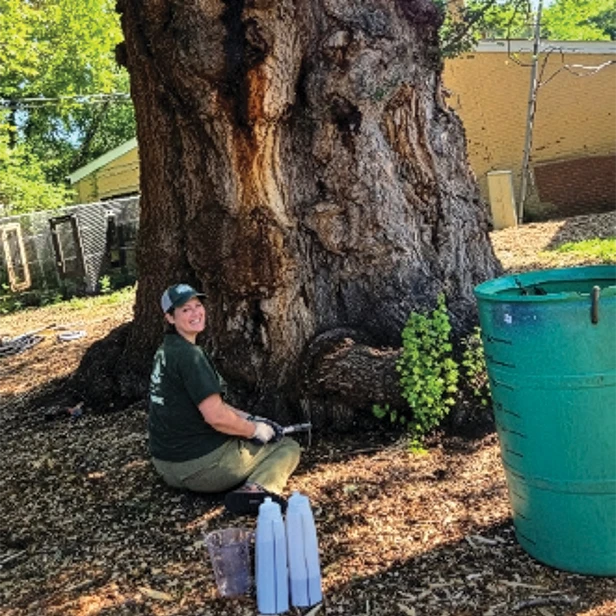
In addition to the grand dame at the Philadelphia Zoo, English elms can be found on other regional grounds: at the English Village at Erdenheim Farms; at Laurel Hill Cemetery; at UPenn’s Kasky Park; at the Glenside train station (which must have been an old estate); and — the #1 champion — at Moravian College in Bethlehem, PA, founded in 1742. Woodlands Cemetery in West Philadelphia, the former estate of anglophile William Hamilton (1745 – 1813), had a spectacular old grove of massive English elms that succumbed to Dutch Elm Disease in 2017. John B. Ward & Company Arborists helps protect the English elm at the Philadelphia Zoo from Dutch Elm Disease by macro-infusion of a systemic fungicide.
When I discover English elms on properties in the Philadelphia area, I always wonder about the original planter and their connection to England. Did a nursery propagate and sell the tree? Was it a cutting from a fellow anglophile? Whatever the journey it took, I am happy that it
arrived, and happy that it survives.