



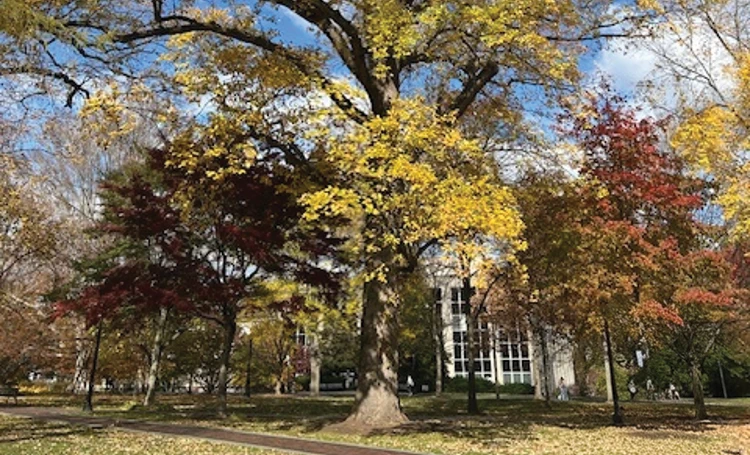
USDA Plant Hardiness Zones are based on average annual winter temperatures — specifically, the coldest temperature a plant can withstand. Zones are numbered from 1 (north central Minnesota) to 13 (the Florida Keys). Because of the trend toward milder winters, in 2024 our region was moved from Zone 6 to Zone 7, which is very forgiving and mildly temperate.
USDA Plant Hardiness Zones are based on average annual winter temperatures — specifically, the coldest temperature a plant can withstand. Zones are numbered from 1 (north central Minnesota) to 13 (the Florida Keys). Because of the trend toward milder winters, in 2024 our region was moved from Zone 6 to Zone 7, which is very forgiving and mildly temperate.
As a result, we are enjoying the opportunity to add to the landscape more “Zone Pusher” plants; that is, plants that grow outside their previously normal hardiness zones. Ornamental plants like crape myrtle, camellia, and daphniphyllum have continually survived the cold winters. This has been wonderful to see and made me wonder about what other plants we could push to help bolster our shade tree canopy.
Consider the oak. Recent extensive droughts, excessive heat, and bacterial leaf scorch have directly contributed to the loss of our aging red oak tree populations. Over the last decade, oak trees from southern zones have gradually pushed their way into the landscape. This is due in part to more nurseries trying to diversify their offerings and many willing gardeners looking to try something new that can withstand our summers.
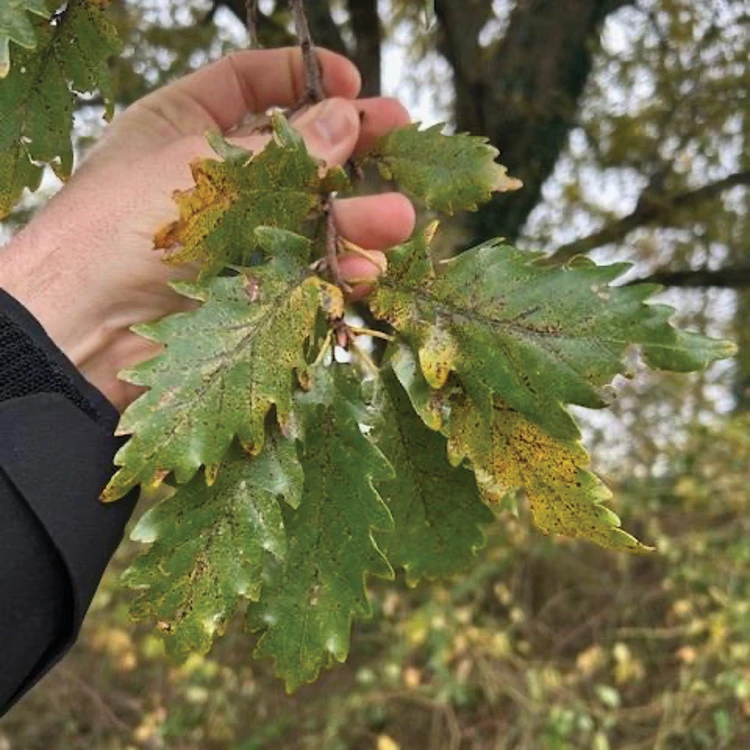
Some commonly found drought-tolerant oak trees are becoming widely available here; these include Bur oak (Quercus macrocarpa), Chinkapin oak (Quercus muehlenbergii), and Shumard oak (Quercus shumardii). Harder-to-find options include Turkey oak (Quercus cerris) and Japanese emperor oak (Quercus dentata).
I have also seen young Southern live oak (Quercus virginiana) and Chinese evergreen oak (Quercus myrsinifolia) doing well over the
last few years. Both species are uniquely evergreen.
Villanova is home to a few mature specimens of Turkey oak and Bur oak. They are frequently found on properties dating back to the early 1900s. Perhaps the gardeners at that time were onto something besides
the rarity of the plant in our area.
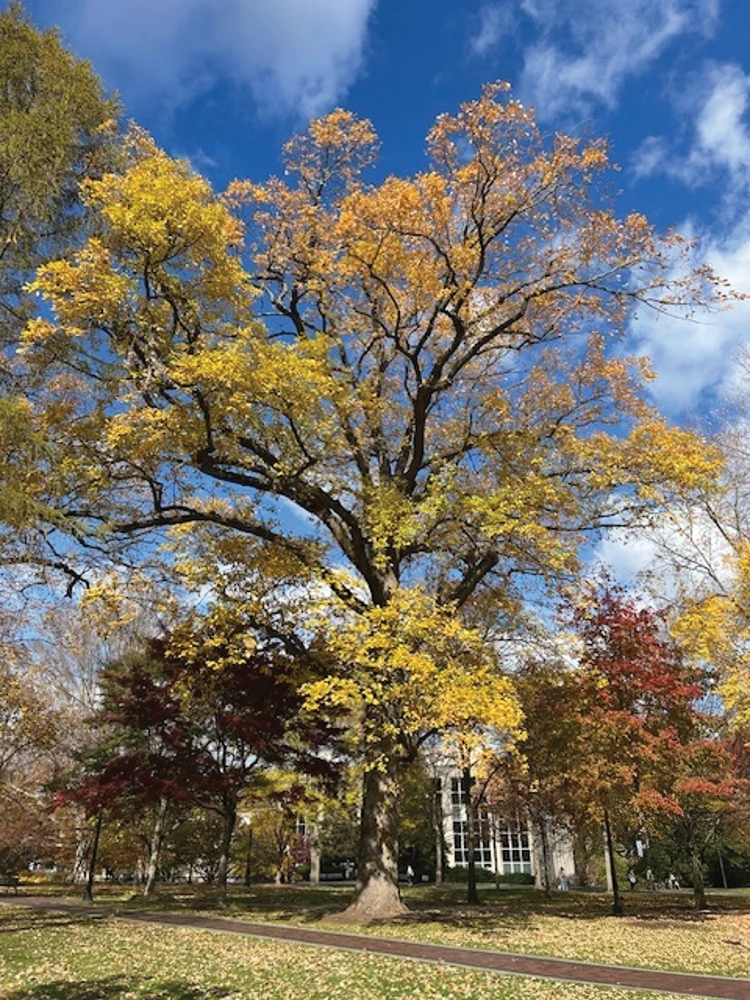
(photo: John Verbrugge)
Our changing climate is already reshaping local canopies. By introducing drought‑tolerant oaks such as Bur, Chinkapin, and Shumard, and experimenting carefully with southern species like Turkey and Southern live oak, we can build a more resilient, long‑lived urban forest that withstands hotter, drier summers.